
Sonically daring and lyrically challenging, Radiohead’s follow-up to the hugely successful OK Computer was the result of much suffering. Thom Yorke endured a psycho-emotional crisis during the extensive world tour following OK Computer’s success while the whole band agonised about their ‘direction’. Yet somehow they managed to both renew their sound and create an album that mesmerises many, saying something very powerful about the creativity and determination of the musicians. Welcome to the introspective, electronic world of the fourth Radiohead album, Kid A.
How did this Y2K record of alienation and chilly (as distinct from chilled) rhythms top the UK and US charts and achieve platinum status in half a dozen countries, including Australia? It was no flash in the pan either; in 2020 Rolling Stone magazine ranked it at #20 in its list of the 500 Greatest Albums of All Time.
Part of the answer lies in Radiohead’s re-animation of electronica. The eleven tracks of Kid A are painted with manipulated sounds using a range of electronic instruments from classics such as the Prophet 5 to the rare Ondes Martenot, developed in 1928. Indeed, this is much more a keyboard/synthesiser album than a traditional ‘rock’ album, in keeping with Yorke’s disenchantment with rock and roll. It is also an oddly retro-progressive record, in that it takes sounds from past decades— notably independent German music of the 70s, aka krautrock—and re-invents them for a new century.
The LP opens with the keening beauty of “Everything In Its Right Place”. After a delicate electric piano introduction that could be from the debut album by French electronica duo Air, Thom Yorke voices his desperation and isolation. The melody is elusive but hypnotic, and as the intensity slowly builds you realise this is not your average chart album, nor rock music in its customary form. Layers, echoes, repetition, deconstruction; this is an experimental LP that beguiles while it disrupts.
Vocals on the title track are so compressed as to be unintelligible, which may not be a bad thing as they are pretty miserable. Yet the percussive, marimba-like sounds of the music are cheerful; chirpy even. Contrasts abound: the voice sounds tortured while the snare drum has an off-kilter sprightliness somewhere between marching and skipping.
Part of the power of Kid A is its insistence you enter its’ world; it may not be all sunbeams and rainbows but it is an intense and vivid landscape. Nowhere is this seen more powerfully than in “The National Anthem”, driven by an hypnotic baseline that Yorke wrote as a sixteen year old. The collapse/incursion of the crazy brass horns is often described as ‘free jazz’ but it also very strongly evokes early recordings by German iconoclasts Faust. Brilliant, potent stuff, if not exactly music to play when staid relatives come for afternoon tea.
Kid A is an album where each track invites—indeed demands—exploration. It is a record to immerse yourself in, one that continues to deliver surprises as layers are revealed. Moments of beauty (“Motion Picture Soundtrack”, for example) contrast with driving beats (“Optimistic”). There is anger and confusion (“Morning Bell”), yet the music unclenches the human angst. There is even an instrumental, Radiohead’s first; “Treefingers” could be a highlight from an ambient soundscape by Brian Eno. Such contrasts give Kid A a quiet, insistent momentum. Despite the downbeat nature of the lyrics, the album as a whole offers renewal, encouraging us to go forward, to continue on the quest even though sadness and loss abound. As the poet Henry Wadsworth Longfellow observed in his famous poem “The Rainy Day” (1842),
Into each life some rain must fall,
Some days must be dark and dreary.
Kid A is a reliable and strangely reassuring companion for a grey day.
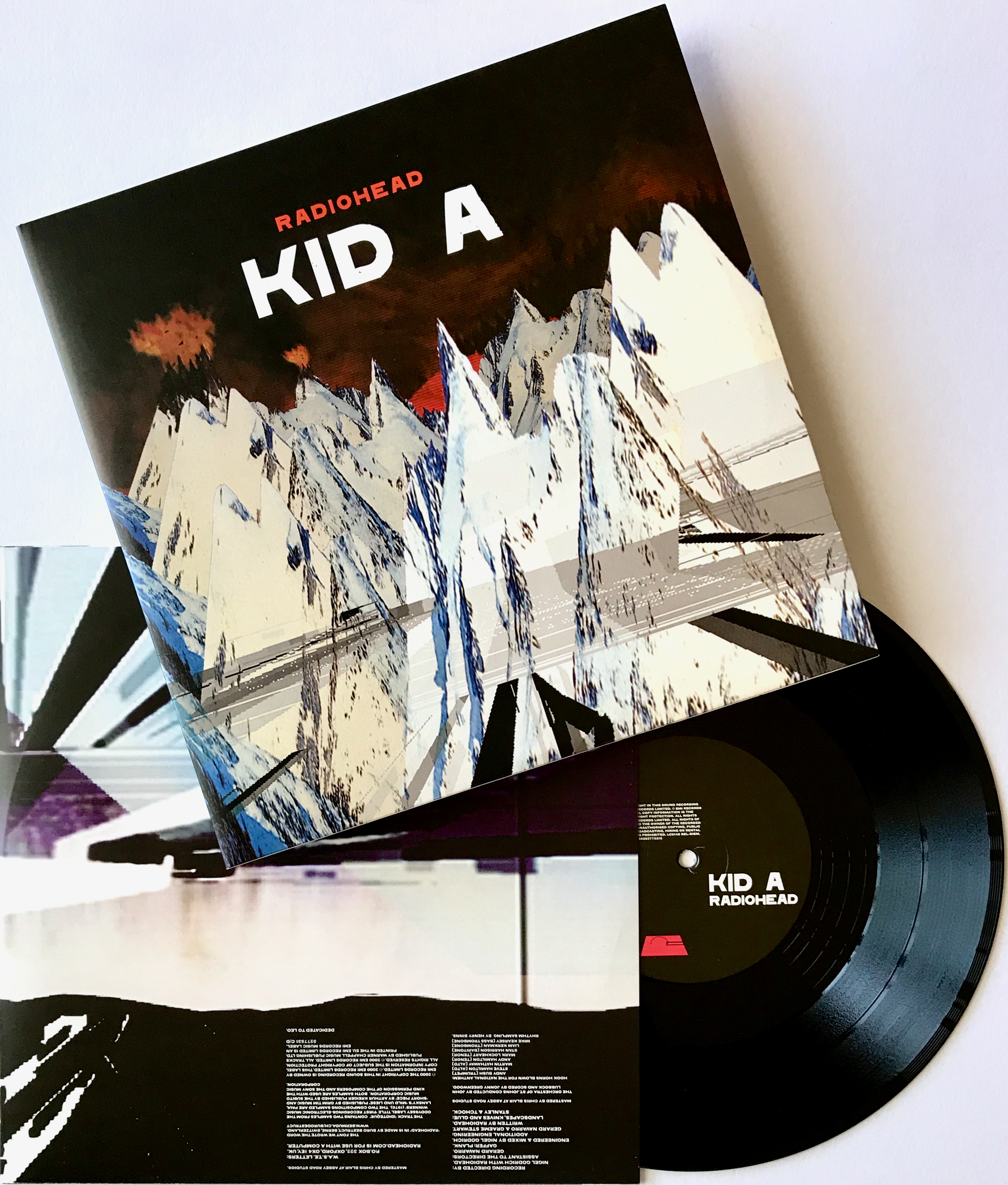
The impractical but pleasing 10″ version of Kid A
Radiohead, contrary and unpredictable as always, re-issued Kid A in 2001, accompanied by the album that followed it some eight months later, Amnesiac. The three LP package—which included unreleased material from the sessions that produced both albums—was called Kid A Mnesia. Of course.
Amnesiac is a more accessible, warmer album than its chilly predecessor. Hearing the two back to back is an incredible trip into both the past and future of rock music; neither album has dated much at all. How you respond to the middle disc, Kid Amnesiae, will largely depend on your level of Radiohead fandom. The committed will enjoy textural insights such as the isolated string sections that sound like ambient film music. Others will focus on the actual songs, including “If you say the word” and “Follow me around” with its strummed acoustic guitars. The song titles of this third disc offer some clues to its genesis. Three pieces are called “Untitled”, a clear indicator of works in progress or cast-offs. Still, there’s no disagreement that Radiohead’s leftovers are worth hearing.
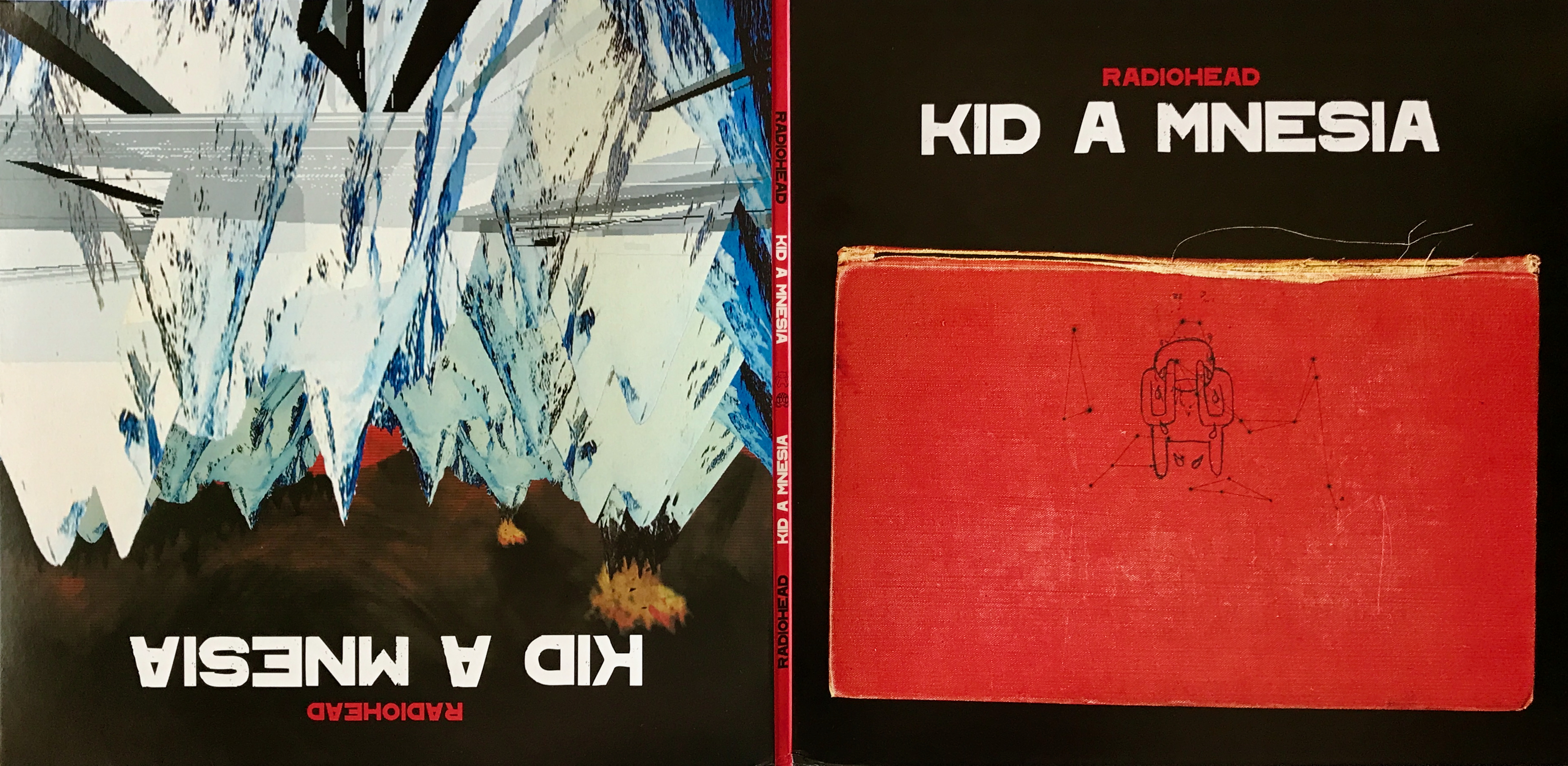
Thinking about this package as a whole, I found myself visualising a gallery installation where the first room (Kid A) really hits you with something profound, different, and at times breathtaking. The second feature room is a development, a consolidation, allowing you to breathe deeply and immerse yourself without fear. In between, you pass through a workshop, cleaned and tidied for public display, where you can see the parts, process, and models of the main exhibition. It is a satisfying journey that will intrigue fans, but perhaps more importantly, offer a rich entry point for those who missed the albums two decades ago. They will come away filled with music and emotionally stirred by these offerings from one of rock’s most significant bands.
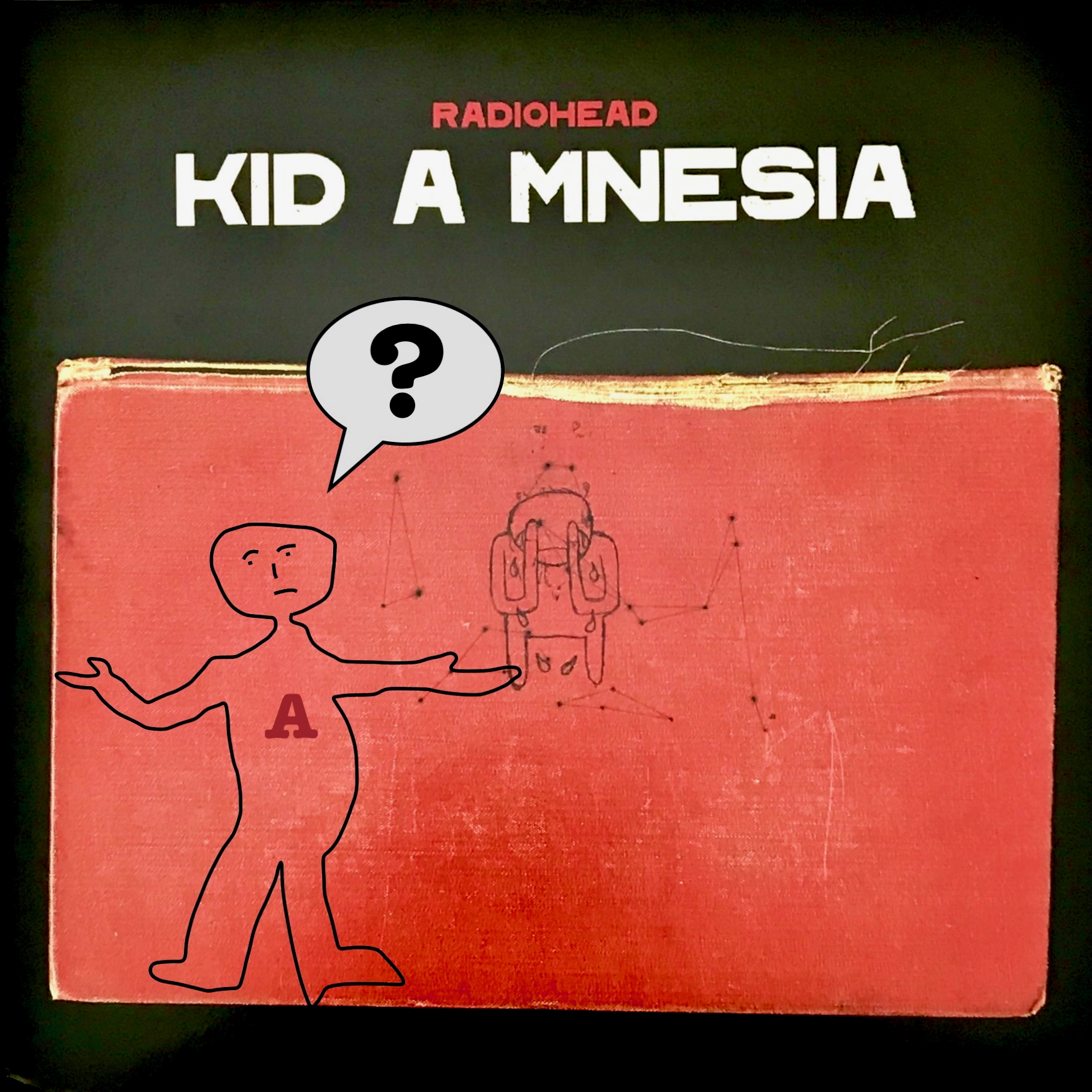
This was the feature image accompanying the original Discrepancy post. It was my little nod to post-rockers Tortoise, though I doubt anyone got the joke.
© Bruce Jenkins 2021. First posted at Discrepancy Records.
Reposted, including additional material, with kind permission.
*


 vinylconnection.com.au
Spectacular. What a story! Of course I’m engaged since I’m such a fan of Kid A especially and have a strong connection to it from the time of its release. A friend once said (actually Anthony) that Radiohead is our generation’s Pink Floyd. What do you think of that? I love especially in your writing here how you zeroed in on the sound of that snare drum, how it’s almost skipping, that’s perfect and reflects quite a keen eye/mind…now I want to play it. But it would blow the soft German ambient I have going with too much angst, ha ha.
LikeLiked by 2 people
A really important record then, being one that may inspire us to continue in spite of sadness and loss.
LikeLiked by 1 person
“Thinking about this package as a whole, I found myself visualising a gallery installation…”
There’s a 2021 exploration game called Kid A Mnesia Exhibition, in which you walk through a very abstract virtual musuem with Radiohead music playing and changing depending on where you are. It can be played on PC/Mac through Epic Games and on PlayStation 5 consoles.
LikeLiked by 2 people
Thanks for the lead. A fascinating project that certainly adds to the Kid A Mnesia package.
LikeLike
Have you ever seen the virtual gallery Radiohead released for free around this project? its available to download for free and it is absolutely amazing – pretty heavy-duty in places though.
LikeLiked by 1 person
Just had a look at the trailer. Intriguing and lavish (if that’s the word).
LikeLiked by 1 person