
#5
LED ZEPPELIN — PHYSICAL GRAFFITI
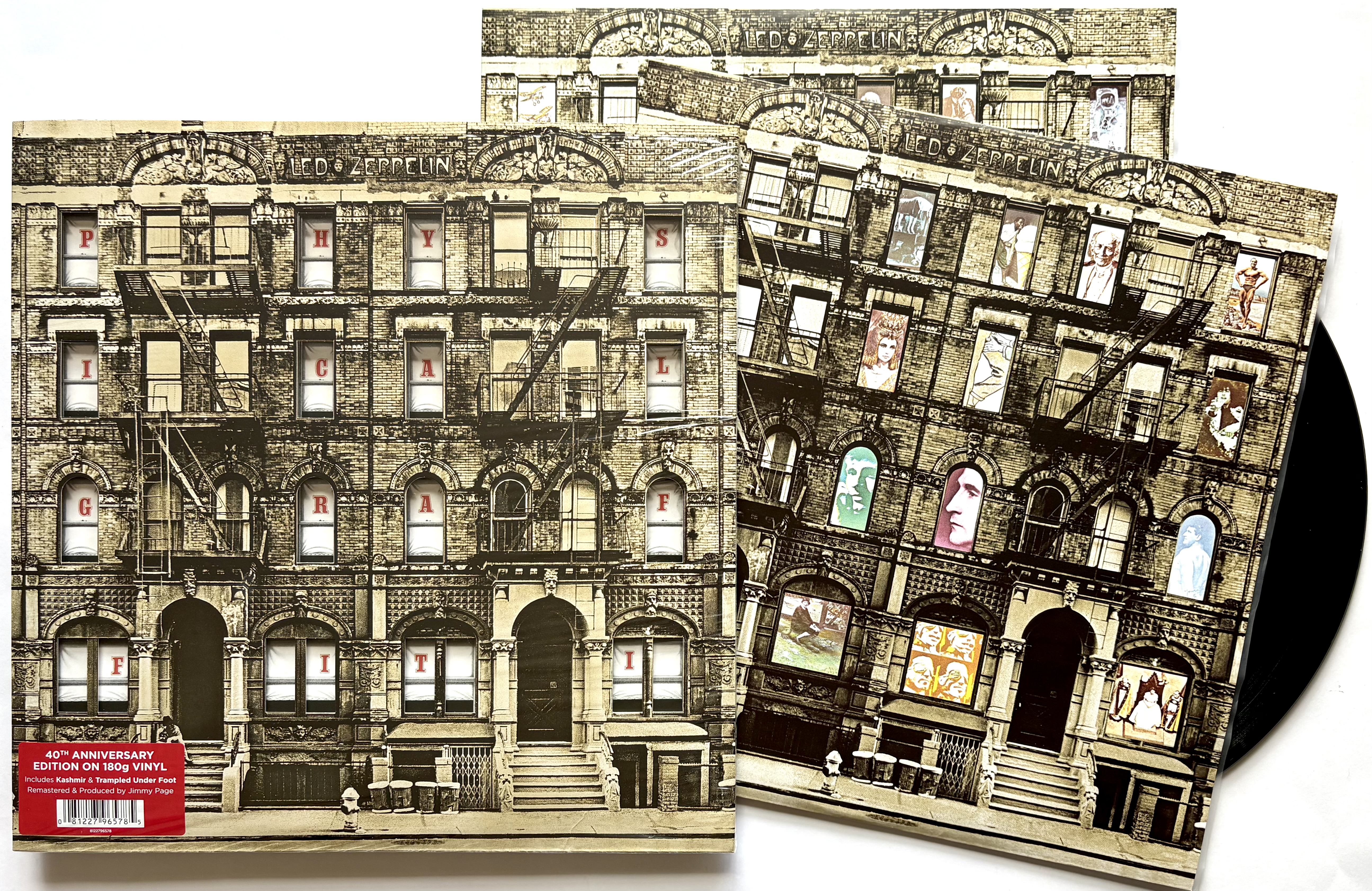
Zepp’s first release on their own Swan Song label was eagerly anticipated, expectations being further heightened by delays due to challenges in the production of the die-cut cover. A studio double album, it is either expansive or sprawling depending on your mood. The epic tracks—”Kashmir” and “In my time of dying”—are widescreen statements of artistic vision as well as thunderingly good hard rock. But there are moments of acoustic reflection too (“Bron-Yr-Aur”) and even some funky rock and roll fun (“Boogie with Stu”). Within the variety, there is also cohesion; this is a world conquering band in full possession of their demigod power.
*
#4
BOB DYLAN — BLOOD ON THE TRACKS

Written amid personal upheaval, the songs on Blood On The Tracks unfold as fractured dialogues with shifting narrative viewpoints rather than confession, lending the album an unsettling yet muted power. The intimacy of the original New York sessions’ contrasts with later Minneapolis re-recordings, adding tonal variety without diluting focus. “Tangled Up in Blue” and “Simple Twist of Fate” anchor the set, while “Idiot Wind” burns with controlled fury. Without doubt Dylan’s mid-career peak, Blood on the Tracks reasserted his authority as a songwriter of rare psychological depth while alluding to a vulnerability that enriches the listener. This writer’s favourite Dylan album would have ranked higher except that the epic story “Lily, Rosemary and the Jack of Hearts” does start to drag after multiple listens over the decades.
*
#3
BRIAN ENO — ANOTHER GREEN WORLD
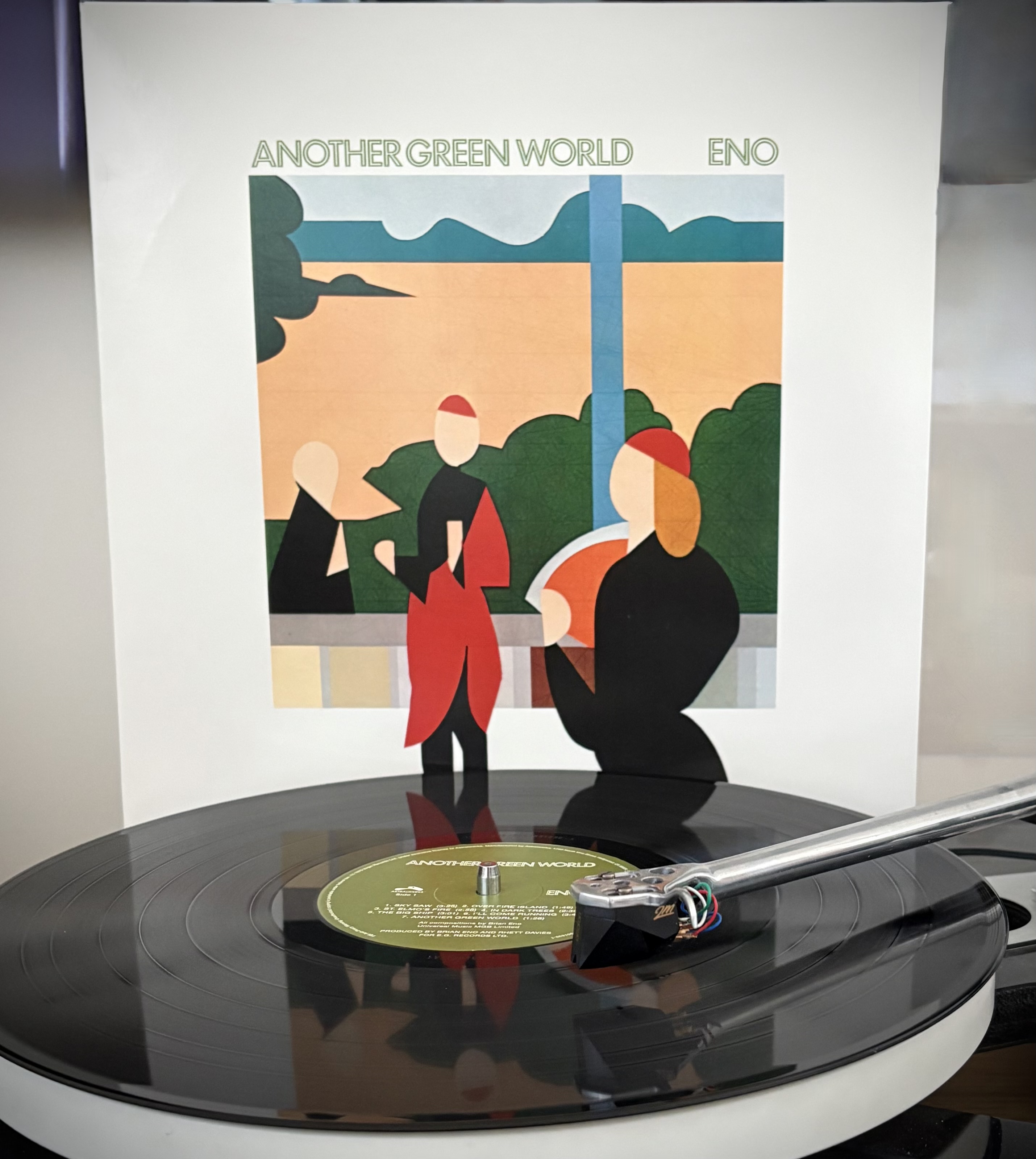
Eno’s third studio album is a rich and complex feast. Blending concise art-pop songs with instrumental miniatures, the album treats the studio as a compositional tool, foregrounding texture, timbre and atmosphere. Tracks such as “Sky Saw” and “St. Elmo’s Fire” balance fractured rhythms with melodic clarity, while ambient pieces like “In Dark Trees” and “The Big Ship” suggest a newly imagined musical ecology. Featuring understated contributions from Robert Fripp, Phil Collins and others, Another Green World is a quietly radical work that laid crucial foundations for ambient music and Eno’s later production aesthetic.
*
#2
NEU! — NEU 75
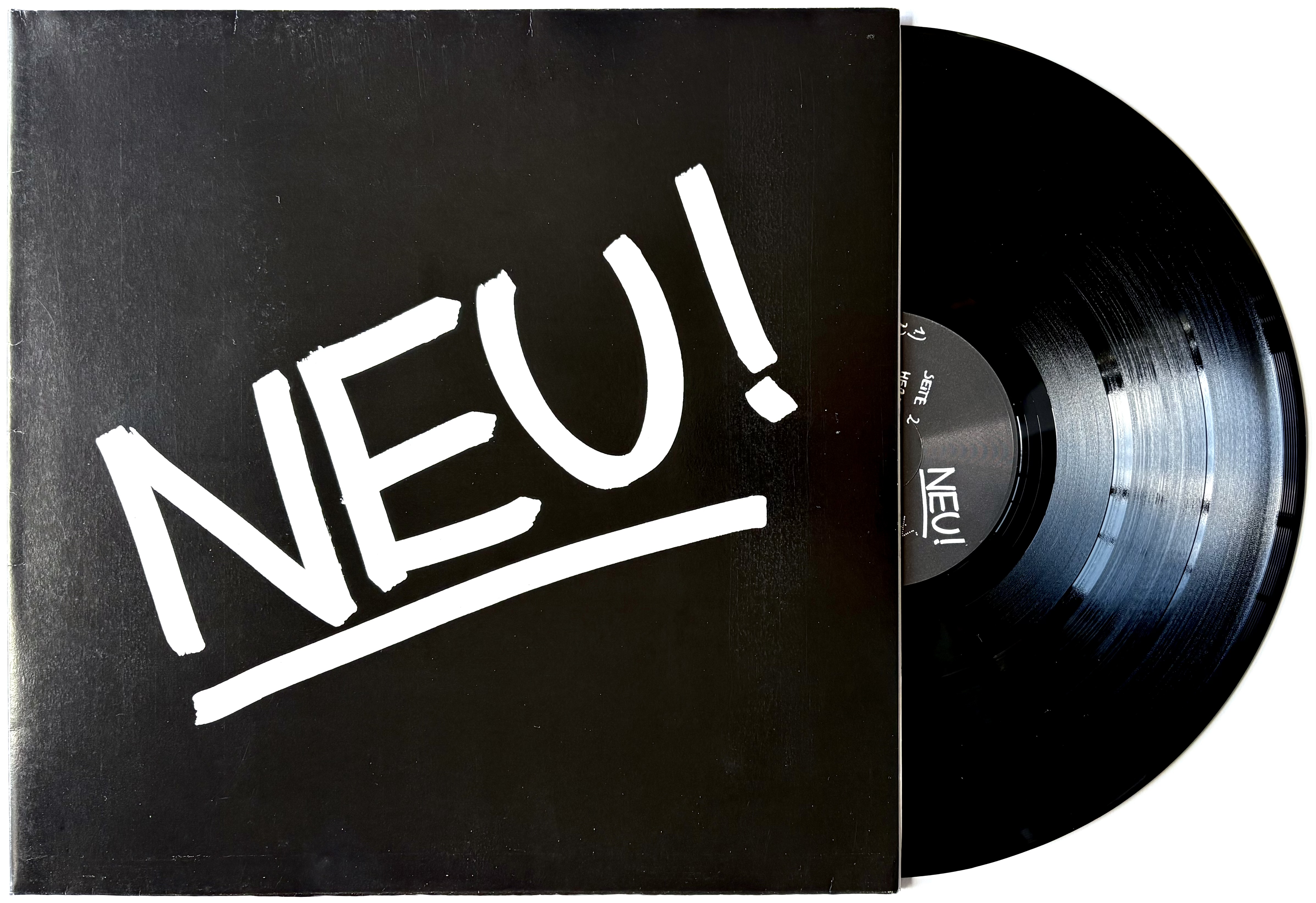
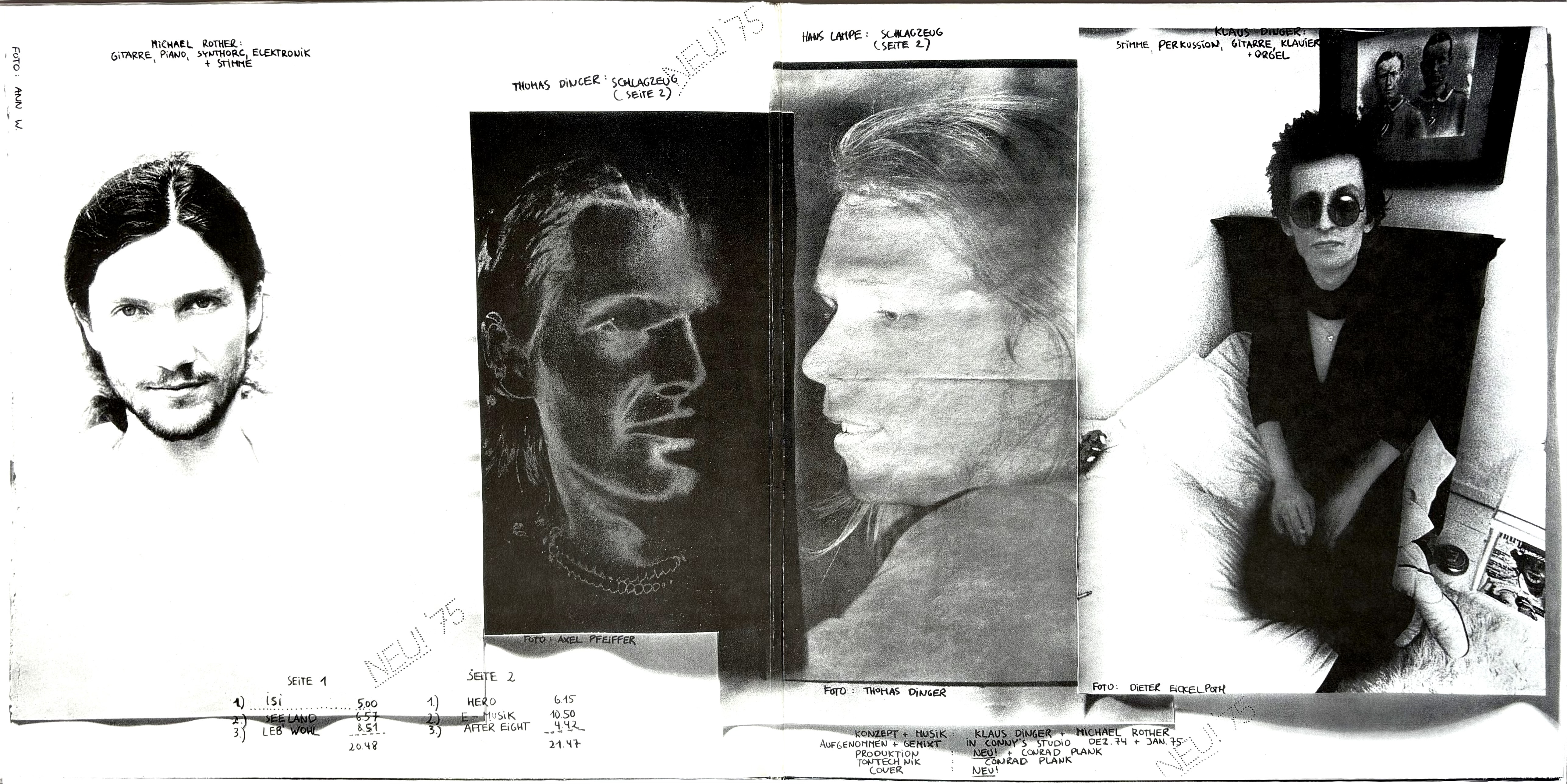
In late 1974 Klaus Dinger and Michael Rother met up and decided that they didn’t want Neu! to end with the ultimately unsatisfying curate’s egg of Neu! 2. They decided on one last ‘Hurrah!’ and entered the studio, producing the crowning glory of their collaboration. Side 1 is richly Rother: gorgeous guitar lines, wistful wisps of melody, rhythms as gently repetitive as the ocean. Piano adds to the tonal palette on opener “Isi”, where guitars and fluttering synths motor along over Dinger’s trademark foundation drumming. “Seeland” unfolds slowly with a melancholy melody evoking tension and an utterly romantic yearning that merges with falling rain and distant thunder.
Side 2 smashes open the door with “Hero”. Listen to this or to the ranting, slavering closer “After Eight” and tell me the Sex Pistols weren’t Neu! fans. Julian Cope calls it “Ur-punk,” which is good enough for me. Beauty and power, loss and rage. It’s a potent combination and a timeless statement that earns Neu! 75 a place in Vinyl Connection Valhalla and the #2 spot in this 1975 list.
*
#1
PINK FLOYD — WISH YOU WERE HERE
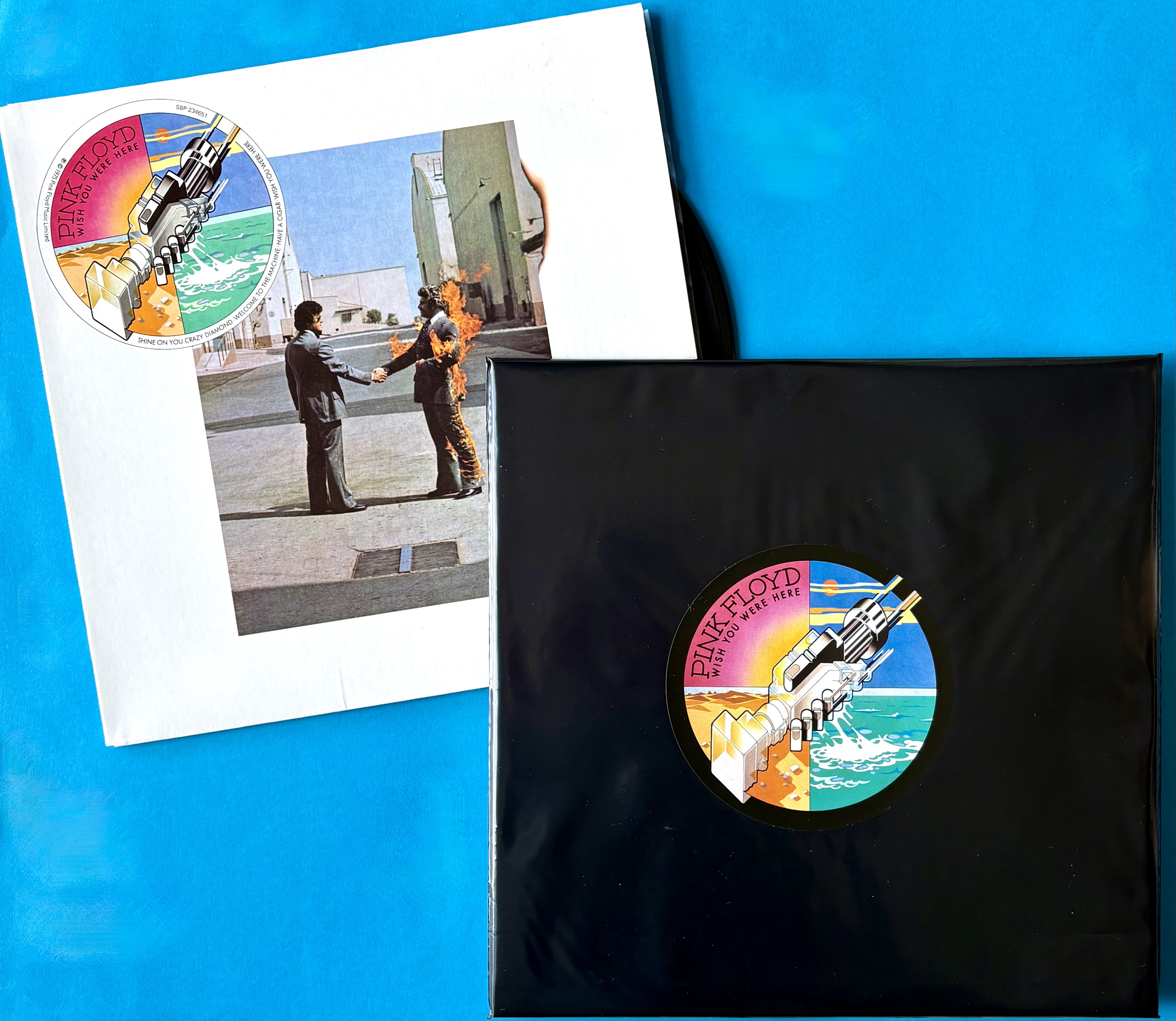
After conquering the earth with Dark Side Of The Moon, Pink Floyd were shadowed by understandable anxiety regarding their follow-up. Eventually, they found inspiration in the things they knew.
- Their own history
- An industry slavering at the door, demanding to be fed.
The result was an album of one extended piece (split roughly in half) and three shorter songs, two of which focused on the music biz.
“Welcome to the machine” and “Have a cigar” are both Roger Waters tunes, snapping at the hand that fed the band. This fury would increasingly overwhelm Pink Floyd and define Waters subsequent career, yet here it is less savage than it would become; more mocking than lacerating. Oh, by the way, which one’s Pink?
The rest of the album has a quite different feel, as it wanders through reflections on Floyd founder Syd Barrett’s mental dissolution. “Shine on you crazy diamond” (Parts 1—5 open the album, Parts 6—9 complete it on side two) is a gently unfolding musical canvas of great charm and romantic sadness.
On this occasion “romantic” does not mean music to soundtrack a candlelit dinner; here the washes of melody and soaring guitar lines pulsate with regret and quiver with loss. Yet—almost surprisingly—the whole is uplifting, glorious even. “Shine on” is a beautiful and haunting elegy for a lost friend. That sense of grief and loss is also present in the title track, the yearning, questioning, “Wish you were here”. The writer once stood in light drizzle on a football pitch in Hannover with fifty thousand people singing along with the band. “We’re just two lost souls swimming in a fishbowl, year after year” echoed around the stadium. Giving voice to loss and confusion, we somehow come closer together and perhaps even find solace.
Ultimately this is the legacy of Pink Floyd’s most integrated and satisfying album. Here the talents of Roger Waters, David Gilmour, Richard Wright and Nick Mason genuinely pooled together for probably the last time, connected by the ghost of their former bandmate.
*
In a few days I’ll post the entire album list with links to each post.
That would be an ideal place to share your 1975 favourites.
I’d love to hear them so get those thinking caps on!


 vinylconnection.com.au
That’s a really strong top 5, although I’d push Another Green World even higher, and wipe that stupid bassline from Rosemary et Al.
LikeLiked by 1 person
Do a Top 5 for Monday, G! Would love to see it.
LikeLiked by 1 person
I was thinking about 1985 sometime, actually.
LikeLiked by 1 person
Well, my pick for #1 was off by three slots: I’d guessed “Blood On The Tracks” would land at the top. “You’re Gonna Make Me Lonesome When You Go” is my favorite track. Maybe this sounds odd, but I would love to have inspired its creation!
LikeLiked by 1 person
“Lonesome” is such a great song. Wistful, cheeky, evocative. Who wouldn’t want a song like that written for/about them? Perfect.
LikeLike
Considering the artists’ respective catalogues, I’ve always felt numbers 1, 4, and 5 were overrated. (Duck, Pete!) However…for the year 1975, they were pretty darn good. Will try to come up with my own favourites, though you already know a few!
LikeLiked by 1 person
Do it, Pete! My Monday morn is when I expect to put up the Index post.
I’ve had a glance at 1976 (fool!) and it looks like a challenge, tbh. Re what you were observing about different years, I have a thought experiment of a 70 FROM THE 70s series in a few years time. Then ask myself, how many of my Top 10 would be contenders. I reckon #1—#3 here would be contenders for inclusion in such a list, probably in the Top 20.
LikeLiked by 1 person
Sounds good, Bruce. I imagine things get more difficult from 1976 onwards. Punk rock served a purpose (taking things back to the basics) but there were only a handful of quality albums, and none would I want to take to a desert isle! (And “no comment” on the ’80s and beyond!)
LikeLiked by 1 person
As a result of our conversation I have been glancing forward; a part of me is drawn to the (still substantial) challenge of doing the entire decade.
1976 does not radiate comets of creativity nor echo with thunderous musical theatricality. In fact it looks pretty meh. Despite the variety that has now overtaken neat categorisation, 1977 does look better as do the last two years. I should live that long.
LikeLiked by 1 person
Not to sound vain or anything, but maybe you can do a “TCRAC”-styled poll of your readers for top 10 of the 1970s. I’d be on board for it.
LikeLiked by 1 person
Great final set I just happened to see, which prompted me to briefly interrupt my current blogging hiatus. With “Physical Graffiti”, “Blood On the Tracks” and “Wish You Were Here” it includes three of the six 1975 albums I decided to highlight this year.
Happy Holidays!😊🙋🏻♂️
LikeLiked by 1 person
Thank you for briefly breaking into your sabbatical, Christian. Glad we over-lapped on some quality albums!
LikeLiked by 1 person
This top five does not surprise me. It’s only this last year that I’ve come to appreciate Eno.
LikeLiked by 1 person
Such an interesting catalogue to explore, DD.
All the best, coz.
LikeLiked by 1 person
The final five!! Thanks for the series, I’ve eagerly anticipated every update. It’s funny how time can slowly soften some critical responses. I’m old enough to remember when ‘Wish You Were Here’ appeared in our local record bars and the response from local and overseas critics. It was far from fullsome, tepid at best, especially from the UK music press. Not as good as its predecessor was the verdict. ‘Underwhelming’ was a word used quite often. My friends felt the same. I’ve always worshipped at the altar of WYWH. I purchased it on two formats- vinyl and cassette. The record came with stickers and postcards, the golden age of prog vinyl!!
LikeLiked by 1 person
Hi Chris. How very nice to see your moniker pop up! I’m entirely with you on WYWH. Always thought they managed an almost impossible task with style and invention. Don’t know if you saw the ‘feature image’ for this post, but it was of the postcard. 🙂
LikeLiked by 1 person
So satisfying, like standing in a stadium in Hannover singing with thousands eh? Thank you for sharing Bruce. Happy 25.
LikeLiked by 1 person
Thank you, my friend.
LikeLiked by 1 person
Wish you were here!
LikeLiked by 1 person
Congrats on yet another wonderfully well-thought considerations of an incredible year of music. My thinking cap is on, and as always, your curated, quality list makes me reflect on my own initial choices a bit, with forgotten thinks remembered, and remembered things reconsidered. Great stuff, well done you!!!
LikeLiked by 1 person
Thanks J Eric. And thanks for the follow-up post in The 1975 List, to which I have responded. 🙂
LikeLike
That’s a hard top five to beat. The only one I would question would be the Zep it’s bloated, although maybe that’s favorable on some days. WYWH is Floyd’s masterpiece it soundtracked my teen years and early 20’s and still captivates. I would add HQ by Harper for its Floyd Zeppelin and Yes connections alone and its anger.
LikeLiked by 1 person
Double albums, eh? So hard not to want to trim a bit here or drop a song there.
I came quite late to Roy Harper and although I have a few, HQ is not amongst them. Sounds like an omission worth remedying. One problem with this process in that so much must necessarily be rejected to bring it down to the required number that I have found I unconsciously favour albums/albums I know better. Harper is in this category. When space permits, this leads to guided listening and some last minute reshuffling of positions, but sometimes it’s easier to let one’s eye drift down the spreadsheet until bells start clanging.
LikeLike
[…] #1 — #5 […]
LikeLike
Congratulations Bruce, eruditely expressed with some of Vinyl Connections finest prose. (That goes for the final top 10 and the whole series). 1975 was like the comet that caused the the demise of the Cretaceous, beautiful to watch (and listen to) until it landed. Punk was on Pluto awaiting it’s opportunity? As John Paul Young sang two years hence ‘Love Was in the Air’ so a memorable year personally and musically.
My Top 10 as generously invited.
1 Bob Dylan Blood on the Tracks
Recall reading an album review over at Newport Rail-yards. Fortunately there was no blood on the tracks. Creatively a high water mark for Dylan not equaled since. Terrific musicianship especially from Eric Weissberg & the Deliverance connection.
2 Bruce Springsteen Born to Run
By the time this third Springsteen album was released it just barrelled off the turntable through the speakers onto the highway. Bruce’s most complete statement.
3 Patti Smith Horses
Stripped down musical accompaniment compliments Smith’s darker poetic message. Massively influential, Mapplethorpe, Rimbaud, Cale et al. Best debut album of the year period.
4 Steely Dan Katy Lied
The ’74 hit single Rikki Don’t Lose That Number from Pretzel Logic made everyone aware of this band. But this release was my first Steely Dan album. Got to know it intimately and most of the studio releases from ’72 to ’80. Quality all the way.
5 Jeff Beck Blow by Blow
Jazz fusion in the hands of one of the guitar greats. From pyrotechnic licks to the Monk homage. Still sounds magnificent half a century later, a testament to it’s maker.
6 Lonnie Liston Smith and the Cosmic Echoes Expansions
Blithely unaware of this release at the time. But some opportunistic musical archaeology found this gem much later as a CD release. Filled the void that Santana left in ’75, (no new album). Not guitar driven or latin influenced, Lonnie’s acoustic and electric piano plus judicious use of brass, percussion and voice. Pure fusion magic!
7 Renee Geyer Band Ready to Deal
Heading in the Right Direction got some deserved airplay at the time. Have seen Renee live on a few memorable occasions, including at Reefer Cabaret when she first performed with a band visiting from Sydney earlier in the ’70’s. Saw this incarnation of ‘her’ band with Mark Punch playing guitar in Perth in ’76. Except for the cigarette smoke! Eschewing the prevalent rock sound with a more USA soul influenced sophistication. Her 2003 release Tenderland reprises her ’70’s hits and some well chosen covers. Bruce worth considering for your 2003 Countdown!
8 Spilt Enz Mental Notes
Another band/artist I had the good fortune to attend their debut performance at the legendary Reefer Cabaret. No internet back than but reports or rumours about coming tours still abound. Stories about the coming to Melbourne via Sydney of this Kiwi band suggested something special was headed our way. Indeed it was it was near Christmas/New Year when typically supplies of recreational cannabis were difficult to score. That night ‘Santa’ arrived with a pound or so of the green stuff so it was party on. The band were delayed in appearing by maybe 30-60 minutes. Not that anybody cared. When Spilt Enz did appear, it was a revelation, all the guys were in uniform/costumes and makeup more Busby Berkerley inspired than the disparate Skyhooks fare. Nobody knew their music but it was vaudeville styled, plently of movement, the house light show and synthesizers. Soon everybody was drawn to the performance, which included Noel Crombie’s musical spoon interlude Phil Judd and Tim Finn as frontmen. Weirdness, what a wild night.
9 Sebastian Hardie Four Moments
Another band performing live back than, was this progressive music outfit. Mario Millo guitarist with the Plavsic brothers on bass and drums with Greg Bushell percussion. Surprisingly no keyboard player listed but the guitar pyrotechnics filled out the largely instrumental sound.
10 The Band Northern Lights Southern Cross
Last spot The Band bumps out Gong Shamal, Return to Forever No Mystery, Edgar Froese Epsilon in Malaysian Pale, Robert Wyatt Ruth is Stranger than Richard. Strangely the last title was the name of former neighbours and indeed… Getting back to The Band, musicians’ musicians all. Once on a very long overnight drive from far Northern Queensland to Southern Queensland, Double JJ played a comprehensive tribute to this band. Most engrossing, illuminating and entertaining.
LikeLiked by 1 person
This is fantastic, Woody! I’m really looking forward to reading properly tomorrow. 🙂
LikeLike
So grateful that you took the time to share not just some fine albums from ’75 but great stories too!
Ah, Newport Rail museum. We took our little Thomas the Tank Engine fan there when he was about three. Grand memories. As for BotT… a creative high water mark indeed.
Horses… as you say, what a debut.
Singing from the same sheet for Beck and the Dan.
Only saw Ms Geyer live once, ’82 or ’83 I think. Saw Sebastian Hardie just the once also, at Wilson Hall, 1975. Toivo Pilt was the keyboard player. They were so good.
Love that Enz story. Gee, I wish I’d seen them. Unique and very special.
Grinned as I saw how you snuck in a few excellent extras under the #10 banner. Should single out ‘Shamal’ as one not on this list, but which I really love. The first of Pierre Moelen’s custodianship of the name, and one definitely in the mix for 1976 (when the LP came out after a false start with the cassette in France, late ’75).
Thanks, finally, for your kind words in the preamble. As I’ve mentioned in various comments, I’m ambivalent about committing to 76 FROM ’76 as I found this year hard work. And also, the list ain’t exactly super inspiring. But we’ll see.
LikeLike
No one is looking forward to 1976. It wasn’t that bad. Try these on as a taster:
The Ramones- self titled
Thin Lizzy- Jailbreak
The Modern Lovers- self titled
Joni Mitchell- Hejira
Super Ape- The Upsetters
Station to Station- David Bowie
and I have a huge soft spot for ‘Black and Blue’ by the Rolling Stones.
LikeLiked by 1 person
Chris, it’s the other seventy I’m worried about. 🤣
LikeLiked by 1 person
I anticipated album releases over the years, none more than this Floyd album. I wasn’t disappointed. Their mystery and mystique was still working it’s magic on me.
LikeLiked by 1 person
Nicely put, CB.
LikeLiked by 1 person