
To understand Spirit of Eden, you need to understand what Talk Talk walked away from. By 1986 they were a commercially successful synth-pop act, lazily bracketed with Duran Duran and the New Romantic crowd. Then came The Colour of Spring, a transitional record that replaced most of the synths with organic instrumentation. It generated a modestly successful single and strong album sales. EMI, pleased with this result, gave Talk Talk a relatively unrestricted budget and open schedule for their next record. It was the rope with which the band would hang the label’s expectations… and weave something extraordinary.
Recording began in 1987 at London’s Wessex Studios and lasted around a year. Sessions took place in a blacked-out studio with oil projector and strobe lighting — not affectation, but an intentional creative strategy. Guest musicians were barred from meeting, and asked to improvise to a fragment for a single instrument. Eventually Hollis and co-writer/producer Tim Friese-Greene had nearly 800 fragments to work with. The guest roster was remarkable: Danny Thompson on double bass, Nigel Kennedy on violin, Mark Feltham on harmonica, Henry Lowther on trumpet, plus woodwind players, a dobro player, a Mexican bass player, and the Choir of Chelmsford Cathedral. All electronic synthesis was abandoned; every sound came from acoustic sources. Five 12-hour days were reportedly spent perfecting a single guitar sound. Engineer Phill Brown’s summary was blunt: the album was “recorded by chance, accident, and hours of trying every possible overdub idea.”
The result is music that arrives like the weather, emerging organically and inexorably. Silence functions as architecture — the dynamic range is not decorative but rather the emotional mechanism of the whole work. Sudden eruptions of distorted guitar or massed drumming fracture passages of near-stillness with visceral force.
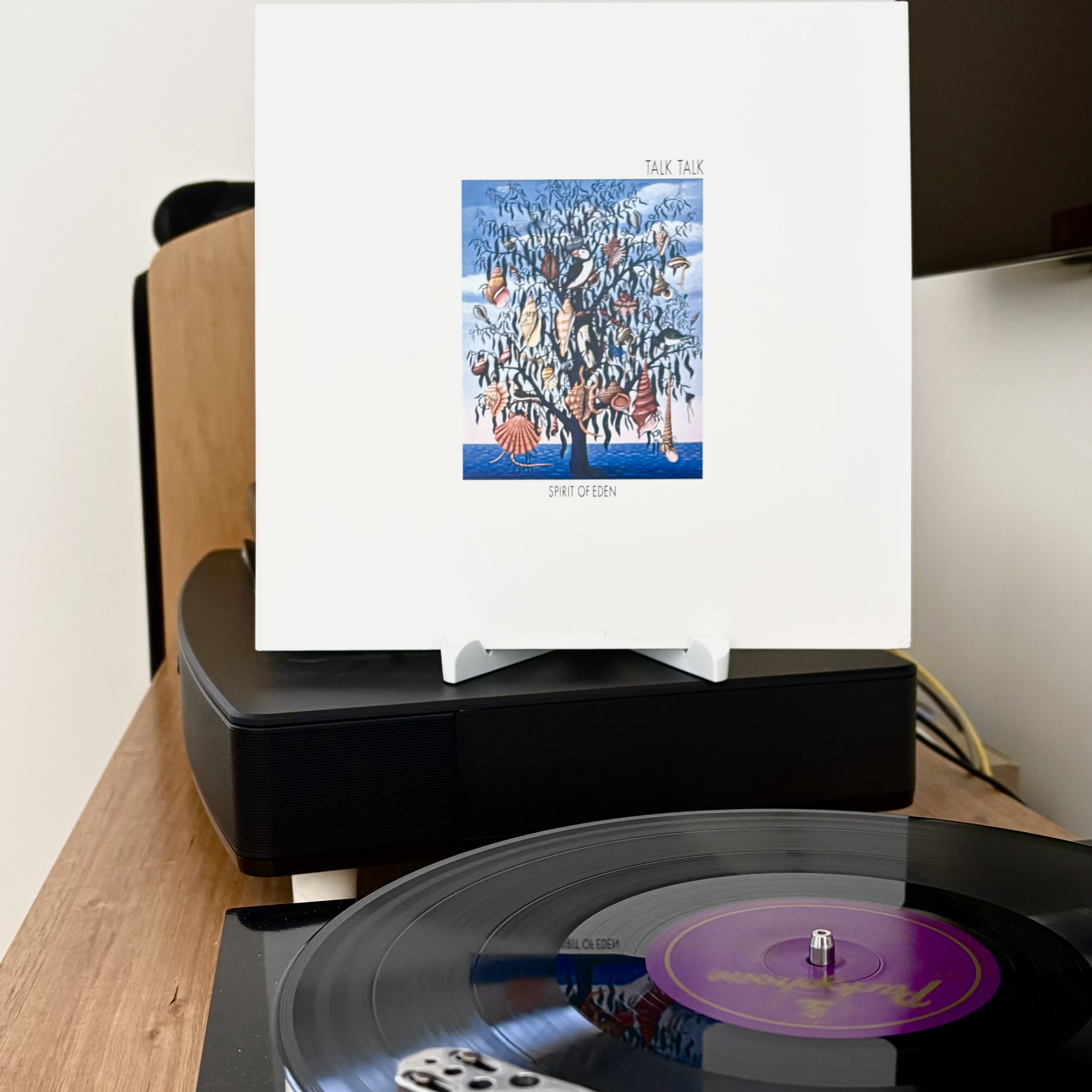
Cover illustration by James Marsh
The first side’s three tracks flow uninterrupted as a continuous suite. “The Rainbow” opens with over two minutes of a muted trumpet before Hollis’s whispered voice arrives; “Eden” is pastoral, morning-lit, periodically disturbed by feedback beneath the surface. The momentum of “Desire” gathers force into something approaching heavy rock before dissolving into a Satie-like piano trickle. On the second side, “Inheritance” offers chamber-music delicacy — cor anglais, piano, and other less identifiable textures. “I Believe in You,” written for Hollis’s brother Ed, who died of a heroin overdose, is the emotional core: organ swells, chiming guitar, then the Chelmsford choir gradually displacing every other instrument until their voices alone remain. It is among the most quietly devastating endings in popular music. “Wealth” closes the album, offering provisional peace; a benediction that subsides rather than concludes.
The immediate commercial story was grim. EMI reacted with shock. There was no hit single. The album seemed unmarketable. What had happened to their hitmakers? Eventually the LP scraped into the UK Top 20 and spent five weeks on the chart before being deleted. The band was dropped.
Yet Spirit of Eden’s afterlife is one of popular music’s most significant stories. The telltale marks of post-rock — textured guitars, glacial tempos, dynamic extremes, ambience and minimalism — were all evident here, years before the genre had a name. Talk Talk’s fourth album paved the way for Sigur Rós, Mogwai, Godspeed You! Black Emperor, Spiritualized, The Verve, and latter-period Radiohead. Producer/Musician Nigel Godrich called it “an incredibly emotional record that I just found myself listening to like a classical piece… as a whole.”1
Released in September 1988, Spirit of Eden outlasted almost everything its era produced — not despite its uncommercial nature, but precisely because of it. Almost forty years on it remains wondrous and scarifying, meditative and tortured; truly that rare thing in rock, a unique and timeless record.
NOTES
1 BBC radio interview on Guy Gavey’s Finest Hour (Date unknown).
Review title from Songs of Innocence and of Experience, William Blake (1789)
First published at Discrepancy Records, April 2026. Reposted with kind permission.
More Vinyl Connection thoughts on Talk Talk here.


 vinylconnection.com.au
So glad to have experienced this album when I did, and how much wonder in doing so. The way this recording was described to me made it sound like an insufferable, drug-infused rabbit hole like experience that drove the label up the wall. But no reliable sources to back that up; it’s just how I always imagined it was. I was delayed coming around to The Colour of Spring but that also hit me deeply when I did, Life’s what you make it. Words to live by…
LikeLiked by 2 people
Colours of Spring is the one I suggest as a starting point — you can hear the dismantling of the pop tropes but still find good strong melodies and beats to latch onto. That’s where I started. But, as you rightly say, this and Laughing Stock (and the Hollis solo LP) are the biz. Nouveau-psychedelic watercolour masterpieces.
LikeLiked by 3 people
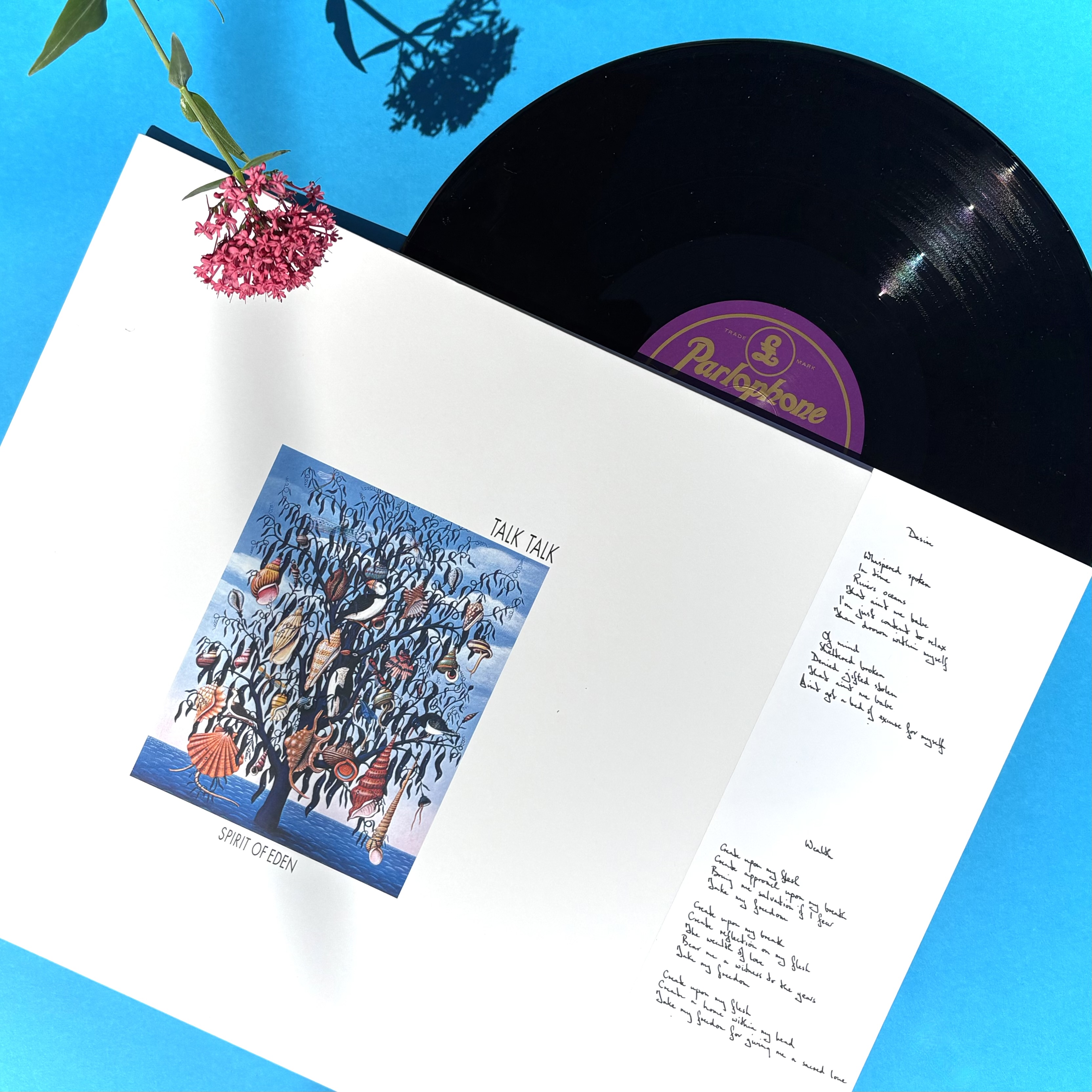
Listening to Desire 1997 remaster now! Never knew the lyrics and enjoying it deeply. That ain’t me, babe! That ain’t me, babe! I’m just content to relax then drown in myself
LikeLiked by 2 people
Thanks for the intro to an album I had not been aware of, Bruce – and, wow, quite a difference from Talk Talk songs I recall from the ’80s like “Such a Shame”, “It’s My Life” and “Life’s What You Make It”! Not only does the recording process sound unique, but the outcome is quite intriguing.
LikeLiked by 2 people
It’s an amazing journey, the Mark Hollis one. Delighted to share something new, different, and utterly mesmerising!
LikeLiked by 1 person
Beautifully written overview of a beautiful album. I really admire Hollis for turning away from commerciality and doing something he believed in. If interested, here’s what I wrote upon learning of his death: https://peterkurtz.wordpress.com/2019/05/02/mark-hollis-of-talk-talk-1955-2019/
LikeLiked by 2 people
Thanks for the link, Pete. I enjoyed reading your tribute. Although how anyone who has spent any time exploring what actually constitutes Ambient music could apply that to Talk Talk and its often startling dynamic range is a complete mystery to me! Be that as it may, folks will get what they can from demanding music so maybe some listeners kept inching the volume down until it really was just a murmur in the background. Have you ventured into the many spaces that constitute the solo Hollis album? Amazing. Now that’s minimal.
Thanks for reading my little piece. 🙂
LikeLiked by 1 person
Excellent write up
LikeLiked by 1 person
Thanks Robert. It’s a while since I’ve written about a favourite album; I’m glad something of that admiration came through.
LikeLike
Great piece, Bruce. I always think of TT on April 5th…
LikeLiked by 1 person
Yes great piece Bruce
LikeLiked by 1 person
Thanks mate.
LikeLike