
What do you get if you mix the diamond grit of Dinah Washington, the heartbreak of Billie Holiday, the brash charm of Janis Joplin and the sass of The Ronettes? It’s a heady and potent cocktail, and one that resulted in soaring peaks and desperate troughs during the short life of Amy Jade Winehouse. In her brief, intense career she produced two albums, won several Brit Awards, sold huge numbers of those two releases, and netted no less than five US Grammy Awards (the first British woman to do so) for her second LP, Back To Black.
Amy Winehouse grew up listening to classic jazz vocalists; their influence is ever-present in her subtle phrasing and light touch with rhythm. After the success of Frank, her 2003 debut, Winehouse struggled with the attention directed towards her private—and often very public—life. Encouragement to seek an intervention via drug and alcohol rehabilitation was shunned by the singer, though it led to the song “Rehab”, a massive hit and the opening track on 2006’s Back To Black. It is an album that struts and swings—in a very twenty-first century way—yet none of the chutzpah can hide the pain and loneliness in the heart of this brilliant, deeply unhappy artist.
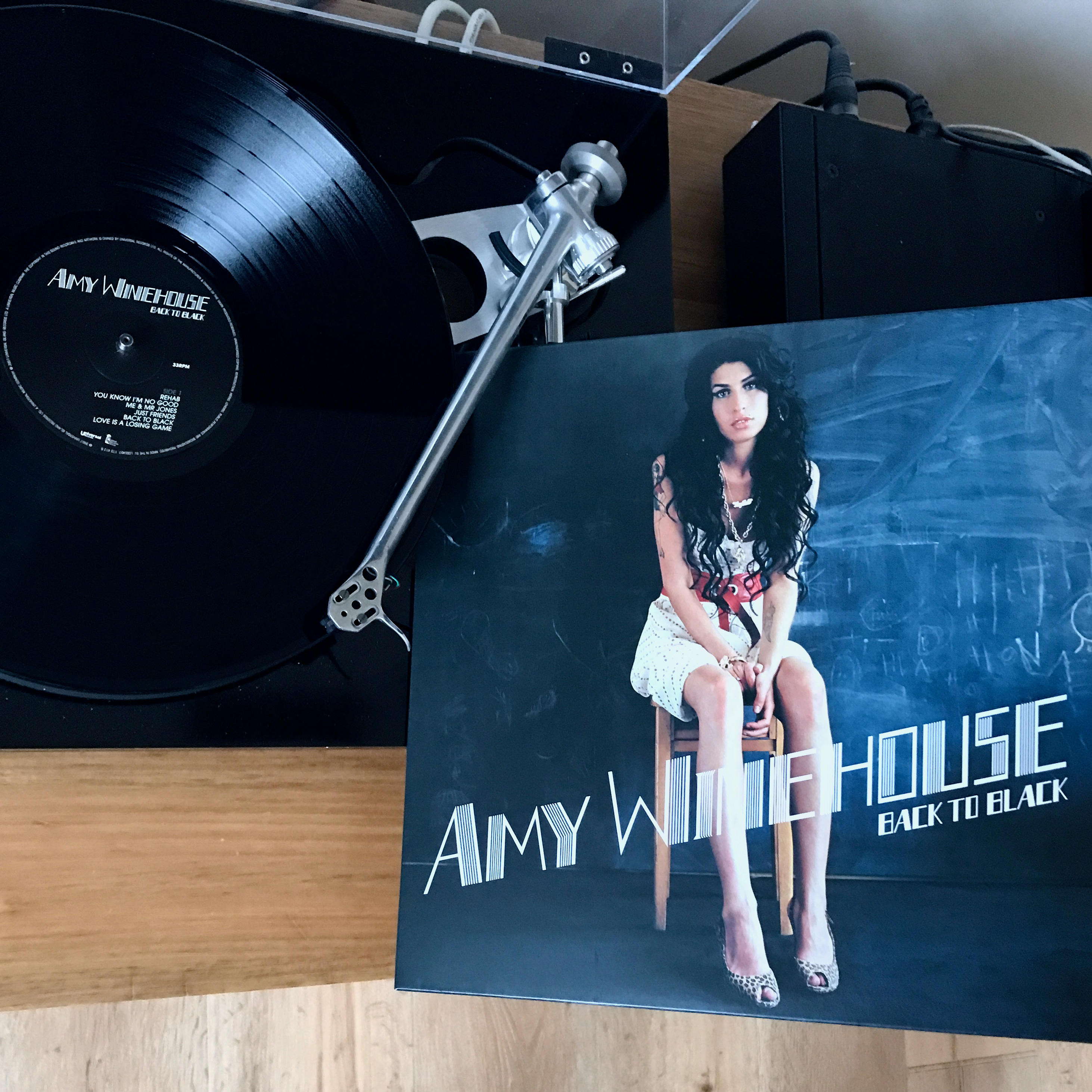
And that’s the paradox, isn’t it? How an artist can take suffering, anger, confusion and loss, and weave them into something that connects with listeners at various levels. We can enjoy the big ballad strut of “Tears dry on their own”, for example, without necessarily sinking into the loneliness of the lyric. Similarly, the hit “Rehab” is incredibly catchy. It shimmies irresistibly even though it’s about wiping yourself out with alcohol. Humour is an important ingredient in the confessional songs of Amy Winehouse. Her combination of caustic observation and a slightly self-mocking tone keeps the songs on the right side of maudlin and allows us to really empathise with the loneliness of a song like “Wake up alone”.
The courage required to show yourself in all your sex-addicted, alcoholic ecstatic misery is staggering, yet on Back To Black it happens in almost every song. The title track, for instance, is about the end of an affair where the protagonist (and we’re in no doubt who she is) battles depression and seeks solace by drinking herself into oblivion. This is straight talking, as are the references to sex. Yet all these public confessions could not, in the end, save the singer.
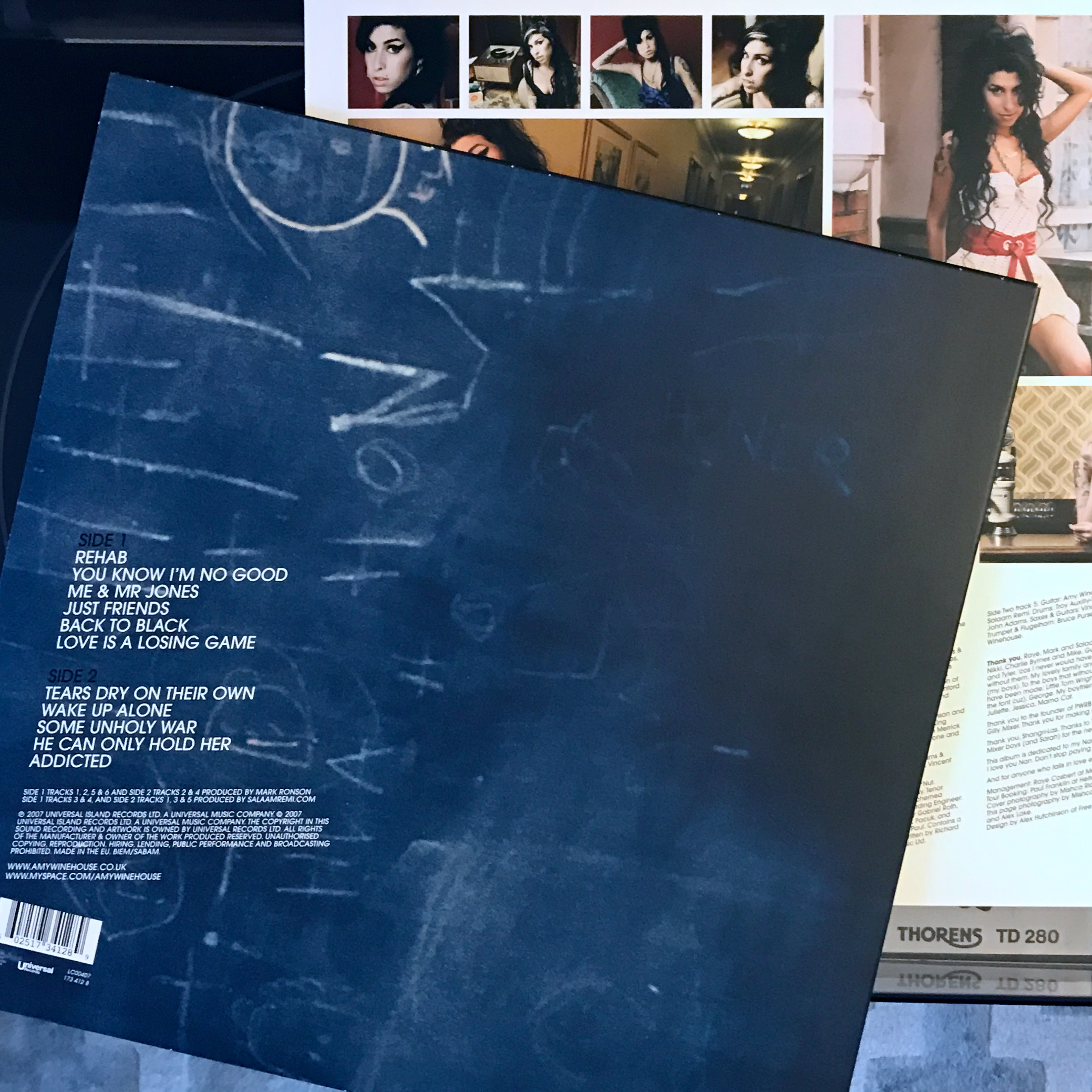
Such contradictions—openness and hopelessness, insight and helplessness, sass and sadness—made Ms Winehouse something special in twenty-first century pop. That and her marvellous, roughened, entreating, blustering voice. That and the great tunes that sound both 60s and modern. That and some marvellous musical arrangements. That and our fascination with doomed creatives. Amy Winehouse could have been a great artist.
Back To Black is a great album.
(First published at Discrepancy Records, 2020. Reprinted with kind permission)


Good piece, its a shame she couldn’t battle through her demons because there was a lot of potential.
LikeLiked by 2 people
Agreed. Great voice and lots of versatility.
LikeLiked by 2 people
She’s a member of that unfortunate group of talented musicians who died at 27 (Janis Joplin, Jim Morrison, Jimi Hendrix, etc.) Such an evocative voice. There’s an excellent documentary about her (‘Amy’) on Netflix.
LikeLiked by 2 people
I never gave Amy Winehouse much attention. Your article sent me off to wikipedia for more information, and then down a 27 club rabbit hole, and finally came to rest on the song (I Wanna) Burnout by Martha Hull and the Steady Jobs https://www.youtube.com/watch?v=bZTcdHR4-co. I listened to a few of Amy’s songs from Back to Black on my way to work (I have a short commute). Very nice stuff.
LikeLiked by 2 people
I worked in Camden for a long time and she was a real feature of the clubs and bar music scene there on her way up. When she passed her image seemed to appear in the street art on every corner. Back to Black is a beautiful album
LikeLiked by 1 person
A wonderful salute, Bruce. It’s so utterly sad she’s no longer with us. – Marty
LikeLiked by 1 person
Totally. She should’ve said ‘Yes, Yes, Yes” to rehab.
LikeLiked by 1 person
You say she “could have been” a great artist, but I think that undersells her. She really was a great artist. It’s just a shame her career and her life were so short.
LikeLiked by 1 person
I dont listen to this as much as I should. When I do the music speaks for itself.
Watching someone in the throws of advanced addiction is probably one of the worst experiences a person can have. Being the addicted one would also be a living hell. You hit a spot with me today Bruce but that’s ok. Reminders of this are examples of how lucky we are if we dont have to experience this first hand. Apologize for the detour Turn the music up fella.
LikeLiked by 1 person
All true words, CB. Take care, my friend.
LikeLiked by 1 person