
An Interview with Fiona McQuarrie
Vinyl Connection: Firstly, congratulations on the recent publication of your book on Fountains of Wayne (J-Card Press, March 2025). It’s great to have something more substantial than a magazine article to dive into.
Fiona McQuarrie: Thank you! When this project first came my way, I was very surprised that there wasn’t already a book about the band. I’m glad I could get into Fountains of Wayne’s story in more detail.
VC: Beginning with the author… Goodreads has a number of titles under your name. There are two music books focussing on individual songs (see below*) and another on industrial relations in Canada. An unusual dual career!
FMc: The short version of a long story is that in the late 70s/80s I started writing about music for a daily newspaper. I got tired of arguing with my boss and I quit, taking a job at a trust company to pay the rent. I thought I should know more about finance, so I enrolled in an accounting course at the local college, and just kept going to university, eventually completing a Ph.D. During that time I occasionally freelanced as a music writer, and was always listening to music and going to shows. Then, after about 20 years as a business school professor, which included writing that industrial relations textbook, I saw a Facebook post from a music magazine I loved (Shindig!) looking for contributors. I thought, hmm, I can do that, and sent the editors a story idea. They asked me to write the story, I did, and they published it. My first music book is based on features I wrote for Shindig!, and the second book uses the same format to cover music from a later era. Now I freelance for a couple of music media outlets, and work part-time in higher education.
VC: You mention that J-Card offered several band suggestions. What made you choose Fountains of Wayne?
FMc: The short answer is that I felt their story should be told so their music would continue to be heard and celebrated. They really deserve to be known for a lot more than “Stacy’s Mom”.
VC: That is for sure. For this fan, it is the sadness at the heart of the band’s songs that makes them special. For every “Leave the Biker” there’s a “She’s got a problem”. “Stacy’s Mom” is shadowed by “Valley Winter Song,” and so on.
FMc: I think Adam’s and Chris’s ability to write sad songs as well as more light-hearted songs—and to do both convincingly—is one of the reasons why Fountains of Wayne are so great. Also, both Adam and Chris can portray real people and real situations without being demeaning, or without exploiting them for cheap laughs. For example, the two guys in “Richie and Ruben” (Sky Full Of Holes) are really ambitious but are hopeless at everything they try. Most people know someone like that, and while you might admire their entrepreneurial spirit you might also be rolling your eyes at why they keep making such bad decisions (especially if they spend your money in the process). That song is just one example of how Adam and Chris can portray complex people sympathetically. Similarly, pretty much everyone has, at some point in their lives, had a crap job or a mean boss, so Adam’s and Chris’s songs about everyday working life, like “Hey Julie” and “Joe Rey”, are really relatable too.
VC: Their vignettes live and breathe. How did the process of writing change your thoughts (and/or feelings) about the band?
FMc: One thing I always wondered is why Fountains of Wayne didn’t become hugely successful. I don’t have an answer to that question even now, but writing the book made it obvious to me how hard they tried. They toured a lot, and they did lots of publicity and other activities to raise their profile. For a significant part of their career they also had a high-profile management firm representing them. Sometimes the music business is just quirky, and acts succeed or fail for no particular reason that anyone can identify. It says something about the music business—its focus on profits and performance metrics—that there isn’t a solid commercial niche for an act like Fountains of Wayne who write brilliant songs but whose image isn’t theatrical or overblown.
In listening to all of their albums again, I also came to respect even more what great musicians they are. There’s a quote in the book from Robbie Fulks to the effect of, all four of them are individually skilled enough to be showing off all the time, but instead they’re playing to complement each other and to support the song. Chris Collingwood said after Adam Schlesinger passed away that Fountains of Wayne could play anything that they decided to play, and it wasn’t until the band became inactive and he started playing more often with other musicians that he realised how rare that was.
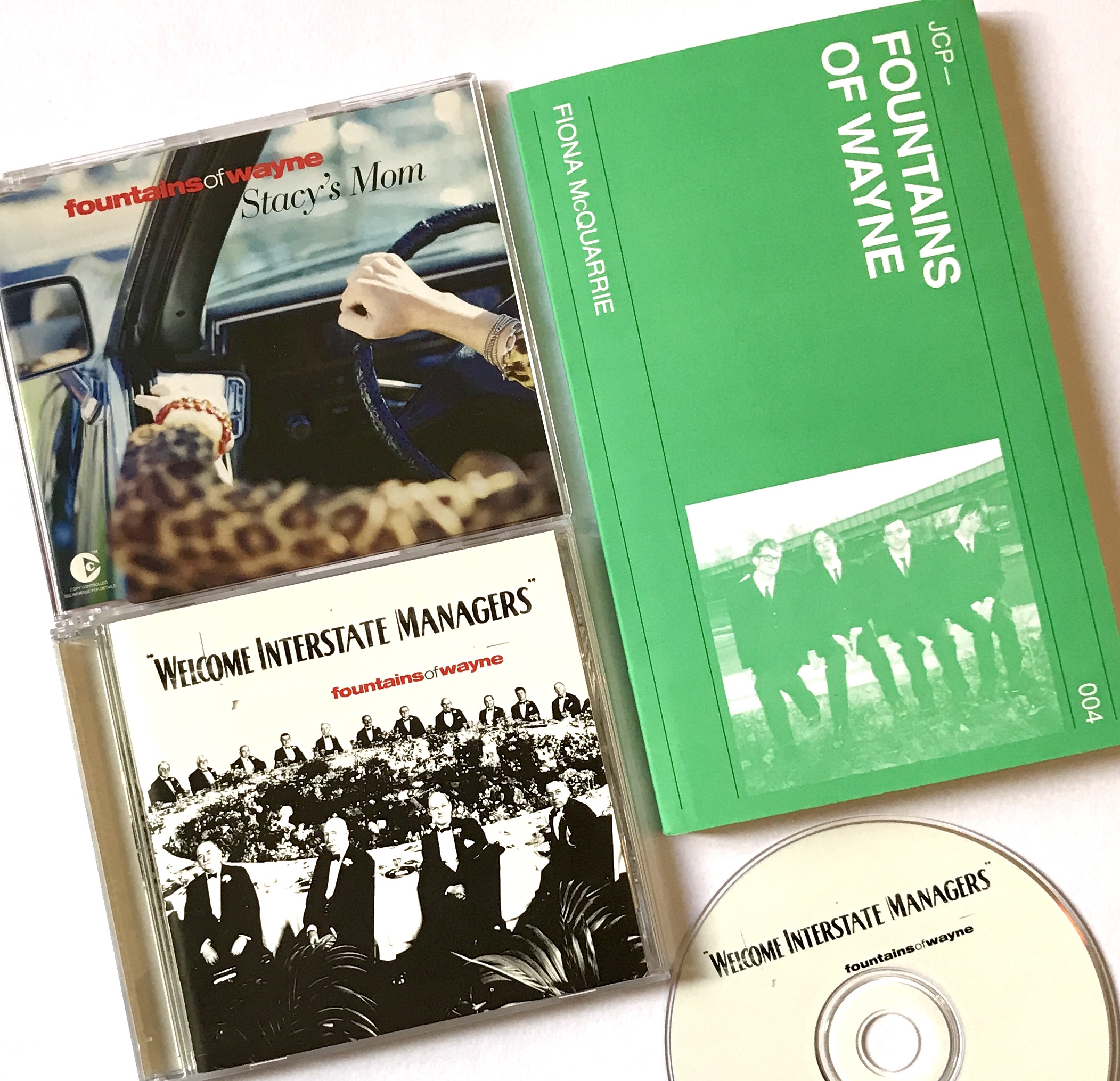
VC: There’s an amazing range of quotes and reviews, from high school reporters to major music publications. I really appreciated the thorough Chapter Notes section. Could you say something about the research process? How long from book commission to submission of the final draft?
FMc: It took about a year to write the first full draft of the manuscript, because I was working at my day job as well. For my other two books, I could work on them in bits and pieces, because each chapter was about a different artist. It was a new challenge to write a whole book about one band, and that took some adjustment.
My basic method of research was to go into databases and run searches on the band name and the band members’ individual names. It really helped that none of the band members changed their names when they became professional musicians! I used newspapers.com quite extensively, and found some really fun things in there, like pictures of Adam when he competed in middle school spelling bees. My day job gave me access to academic databases that included music business publications, and occasionally sources such as LinkedIn and genealogical databases turned out to be surprisingly helpful. I also just Googled, and ran searches in the Internet Archive, to get information from publications or sources that no longer existed or were no longer online. And I read a fair number of books, like books by or about acts from the same era, and books about things like MySpace and college radio, to get a sense of the context of the times.
I organised everything in a looseleaf binder, with at least one page per year from the late 1960s to 2025. I wrote everything I found in those sources on the page for the year when it happened, and then built the narrative using those pages.
VC: That’s a great description, thank you. Everyone who has attempted a substantial written work will recognise the effort, and all who read the book will value the thoroughness of your research.

VC: Music books rarely have a gob-smacking last page finale. But yours does! The announcement of a reformed Fountains of Wayne playing live in mid-2025 is astonishing. How did you react when you heard that news? Will you attend?
FMc: The week the concerts were announced, in mid-February, is a week I will never forget. The manuscript of the book had been finalised and was on its way to the printer, and pre-order sales had begun. Then I started seeing online posts about some third-party information suggesting that live shows were being planned. I also got some information from a friend of a friend that made me suspect something was up, although I didn’t know exactly what it might be. However, “I wish Fountains of Wayne would play live again” was a regular topic of online fan discussions, so I dismissed this speculation as over-enthusiastic fans reading more into a rumour than was actually there.
But just to be safe, I emailed Jeff Gomez, J-Card’s owner and publisher, and said, “You should know about this.” Because I had written the book on the very reasonable assumption that Fountains of Wayne’s career had ended.
The morning after I sent that email to Jeff, I got up, turned on my phone, and went on Facebook. As soon as I logged in I got all these notifications of posts I was tagged in, and I thought, what the hell is going on? I looked at one of the posts, and it was the announcement for the show in July. I went, “Holy shit, this is fantastic!” And then my stomach dropped ten stories. I was thinking, “Oh my God, the book is all about how the band is finished. My book is doomed!” I emailed Jeff a link to the official announcement and said, and this is a direct quote, “Oh shit, what are we going to do?” His reaction was, “This is going to be great for the book!!” There was just enough time in the production schedule to pull the manuscript and revise it. I spent a very intense couple of days rewriting large parts of it, especially the ending, and then it went back to the printer. Selfishly, I’m just glad that the announcement came out when it did, so that I could update the book before it was published.
VC: That is a brilliant story. I reckon your book was luckier than a number of the band’s music industry experiences. What about the shows, then?
FMc: I’m thrilled about these shows. I think it’s been handled really smartly. Unlike a lot of other bands from the 1990s and 2000s, Fountains of Wayne, or some version of it, hasn’t been doing shows at casinos, state fairs, nostalgia festivals, those sorts of gigs. They’re not on The Masked Singer or anything like that. They’ve made very deliberate choices. Chris, Brian Young, and Jody Porter have obviously played together for a long time, but now there’s a new bass player, Max Collins, who’s performed with Chris and Jody in the past. Doing festivals gives them the chance to see how the new lineup works, without having to commit to anything more at this point. And getting the approval of Adam’s family before going ahead was very respectful and thoughtful.
VC: Absolutely. Demonstrates that they are a class act.
FMc: The two shows that have been announced are several thousand miles away from me, so I won’t be going. It’s too far and too expensive to go for a festival appearance. But if there are more Fountains of Wayne gigs, especially as a headlining act, and any of those are on the West Coast or in central Canada, I will definitely be tempted!
VC: Perhaps if it zings, they’ll mount an international tour. Well, thanks a lot for talking to Vinyl Connection, Fiona. I’m sure both FoW fans and aspiring music writers will get a lot from your thoughtful reflections.
FMc: You are welcome, and thanks for supporting independent authors and publishers!
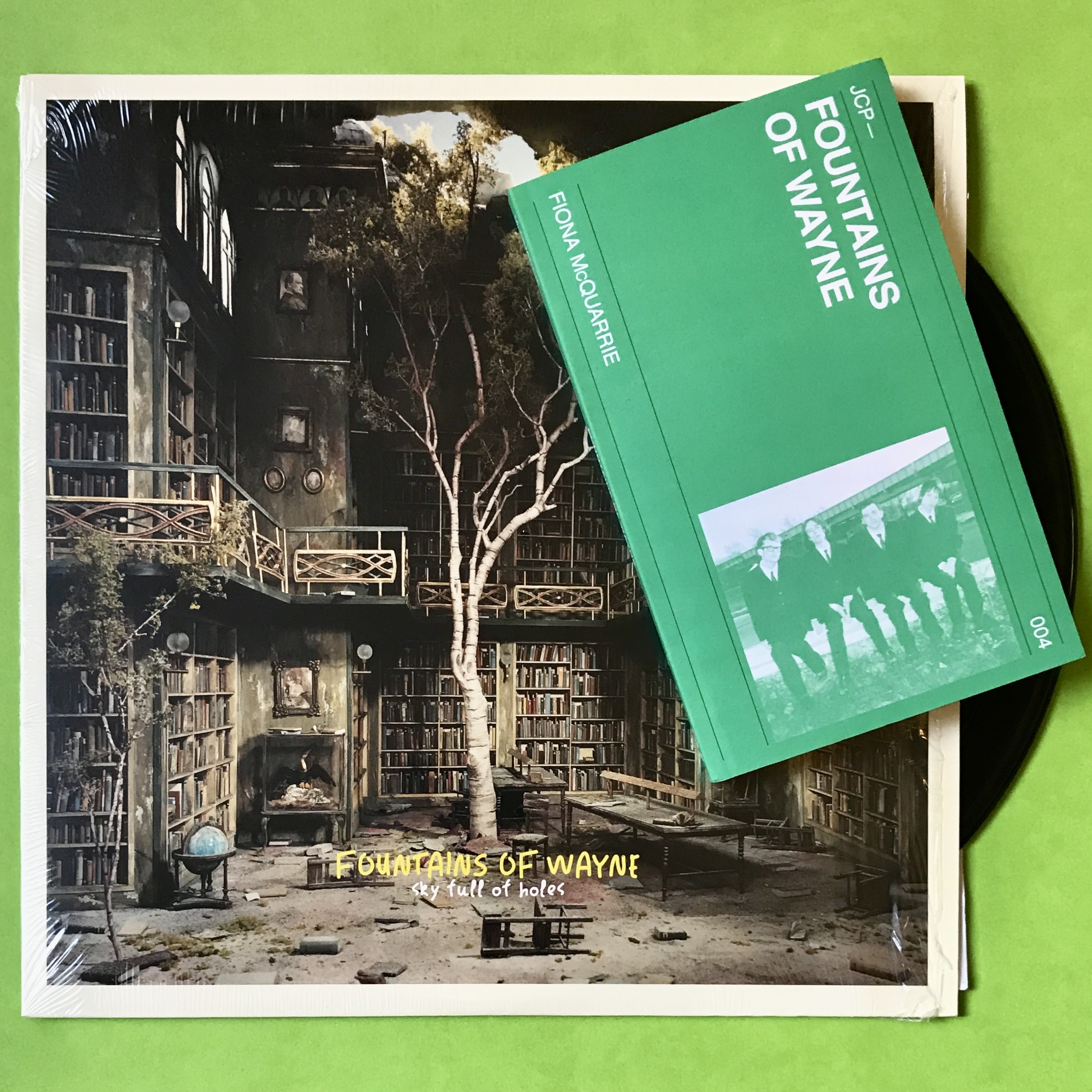
* Fiona McQuarrie (2018) Song Book: 21 Songs from 10 Years (1964-74) Newhaven Publishing
Fiona McQuarrie (2022) Mixtape: 21 Songs from 10 Years (1975-1985) Newhaven Publishing
Find a copy of the book via this link.
Part One of this article is an overview of the Fountains of Wayne journey and a VC review of Fiona’s book.


 vinylconnection.com.au
Gobsmacker of a finale indeed, what a nice twist for the author and readers! Now I’m intrigued with the band Bruce, and what a cool project for you two to connect. Thanks for sharing…odd that LinkedIn could be a credible source for helpful research too innit?
LikeLiked by 3 people
It is. Not sure I’d have ever thought of LinkedIn!
LikeLiked by 2 people
[…] Two of this feature is an interview with the author, Fiona McQuarrie. Fiona was good enough to subject herself to interrogation-by-email and was a generous and engaging […]
LikeLike
Excellent interview.
Thanks Bruce,
DD
LikeLiked by 2 people
I didn’t know about the reunion! Assumed it would never happen without Schlesinger.
LikeLiked by 2 people
A reasonable assumption, G, one that most made I think! If they toured I think I’d probably go (if the venue was OK). What d’you reckon?
LikeLiked by 1 person
I just came across this interview (I missed it at the time), but funnily enough my copy of Fiona’s book arrived about a week ago, which meant I was very curious to read this interview (and not just as a FoW fan).
I’m looking forward to reading the book even more now! When I ordered it, I also ordered a copy of the new Apples in Stereo book by Josh Bloom (also published through J-Card Press). Have you come across that one as well?
LikeLiked by 1 person
I haven’t. Sounds right in their wheelhouse. I did have some correspondence with the J-Card principal, investigating whether there was overlap in our missions, but his focus is that bit later than my prime areas of interest and expertise.
LikeLike