
Jane Siberry — No Borders Here [Open Air Records, 1984]
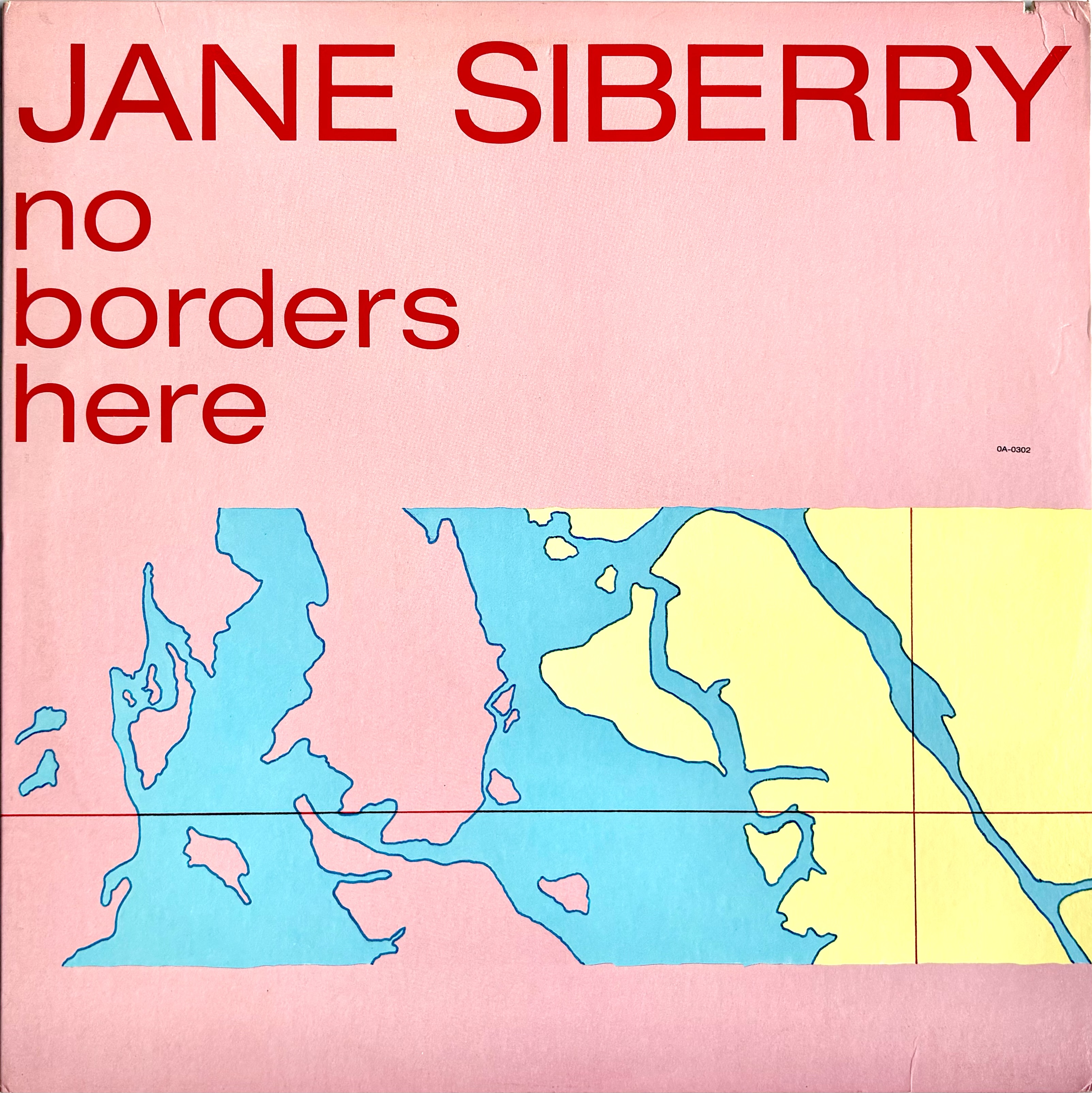
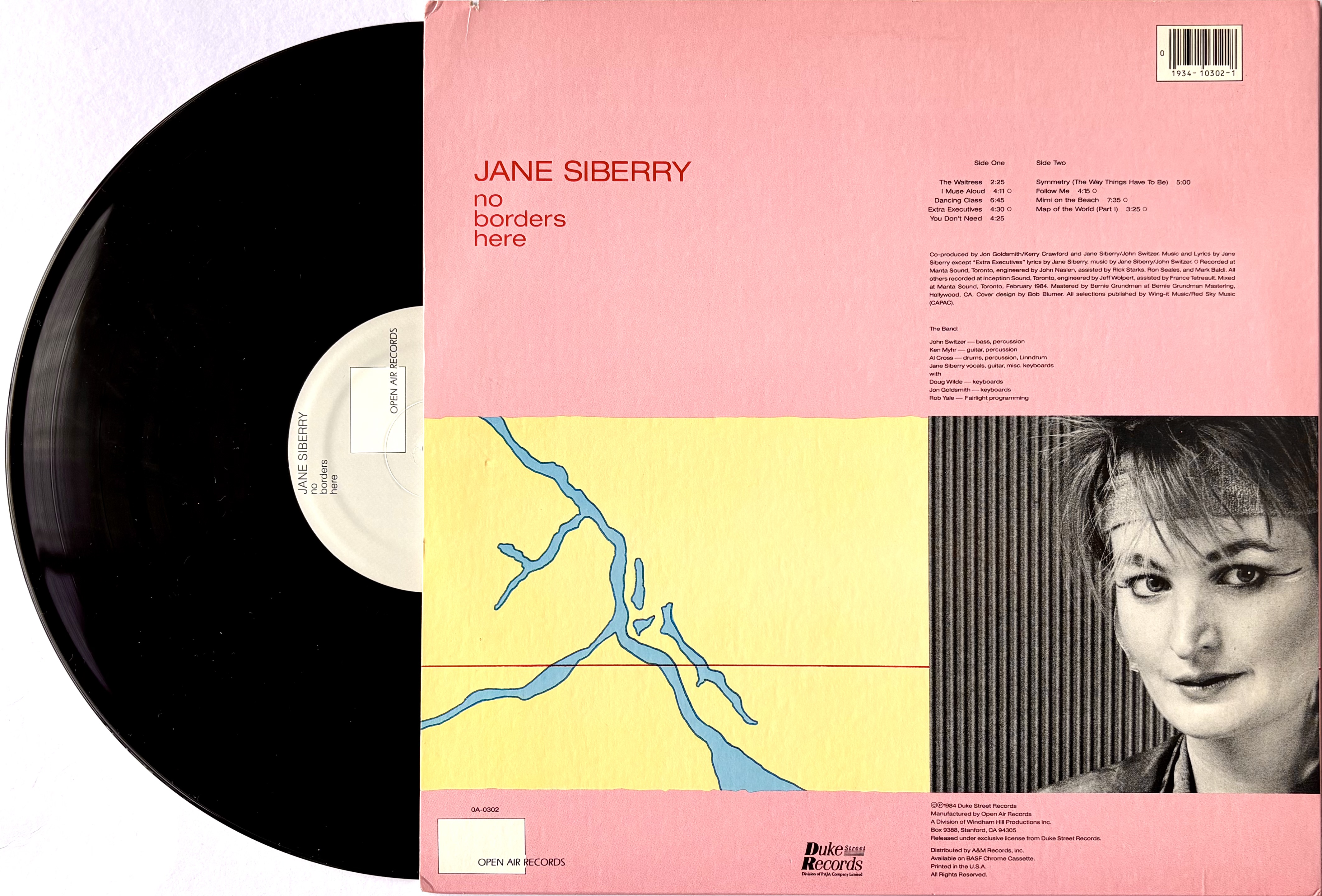
A Canadian singer-songwriter of great imagination and enormous range, Jane Siberry emerged from Toronto’s indie scene. Influenced by—but never beholden to—Laurie Anderson, her music (and unique voice) span art pop, folk, rock and subtly experimental sound worlds.
No Borders Here is an early statement of Siberry’s singular vision. Spare electronic textures, poetic lyrics and a searching—sometimes haunting—delivery create an atmosphere that is both intimate and otherworldly. Perhaps not her most accessible work, but an LP that rewards attentive listening. Standout track: “Mimi On The Beach”
I really enjoy how the unidentified geography on the cover has neither borders nor map co-ordinates.
*
Brian Eno — Ambient 1: Music For Airports [EG, 1979]
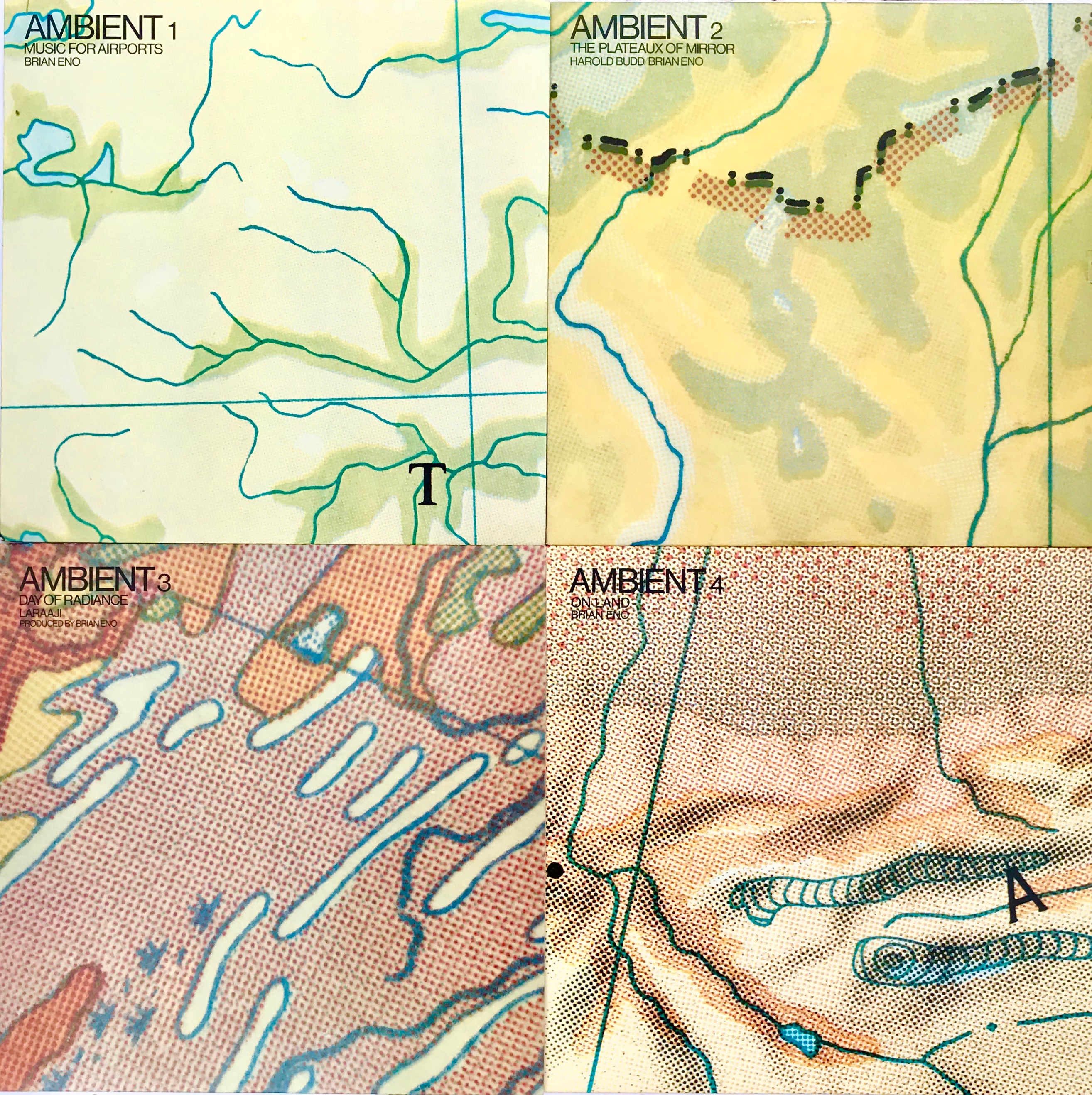
Eno’s seminal ambient Music For Airports was also the beginning of a series of four albums that used map excerpts for their cover art. Read more in a post from 2024, here.
*
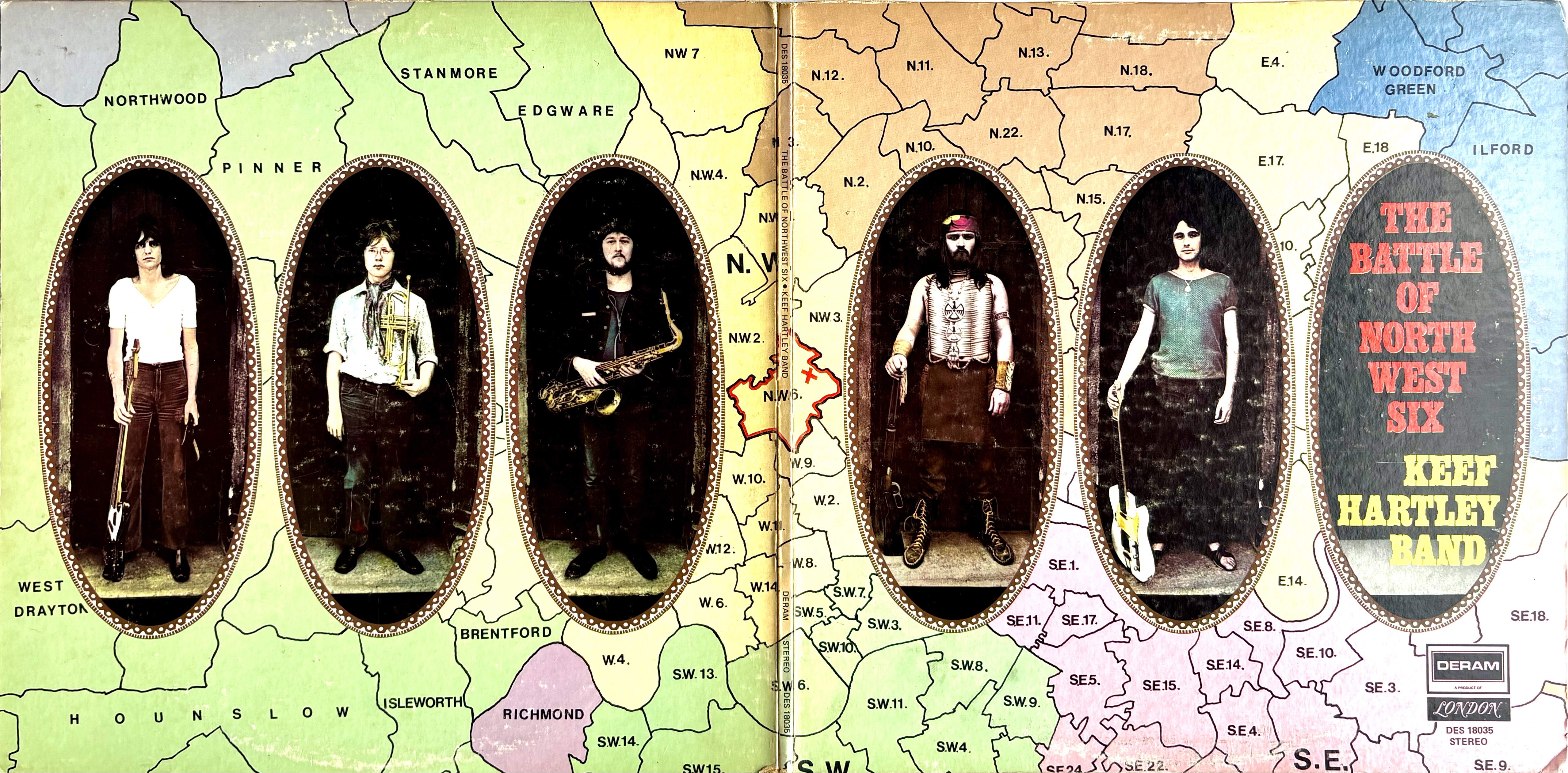
The Keef Hartley Band — The Battle Of North West Six [Deram, 1969]
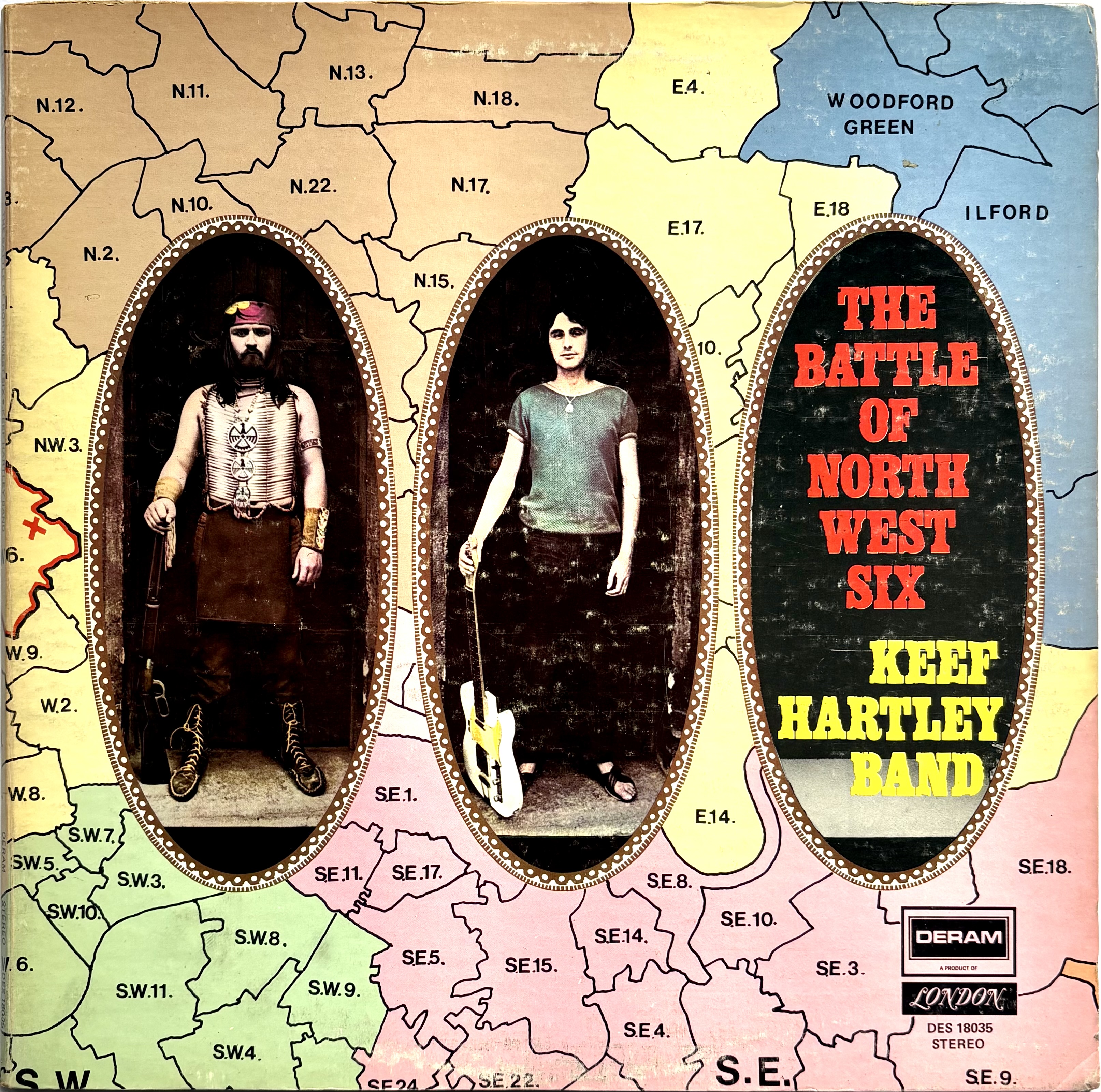
After a stint with John Mayall, Keef Hartley assembled a progressive blues outfit who became a formidable force in Britain’s blues-rock explosion. This was their second LP, and the second released in 1969. Rather than simply recreating American blues, the group stretched the form with jazz-inflected arrangements, brass, muscular rhythms, and adventurous songwriting, making this an entertaining and satisfying album for fans of late Sixties rock morphing into a variety of new, energetic sub-genres.
The North West Six of the title refers to the London district of West Hamstead, the postcode of Decca studios where the album was recorded. Although the studio closed in 1981, the building still stands.
*
Martha & The Muffins — Metro Music [1980]
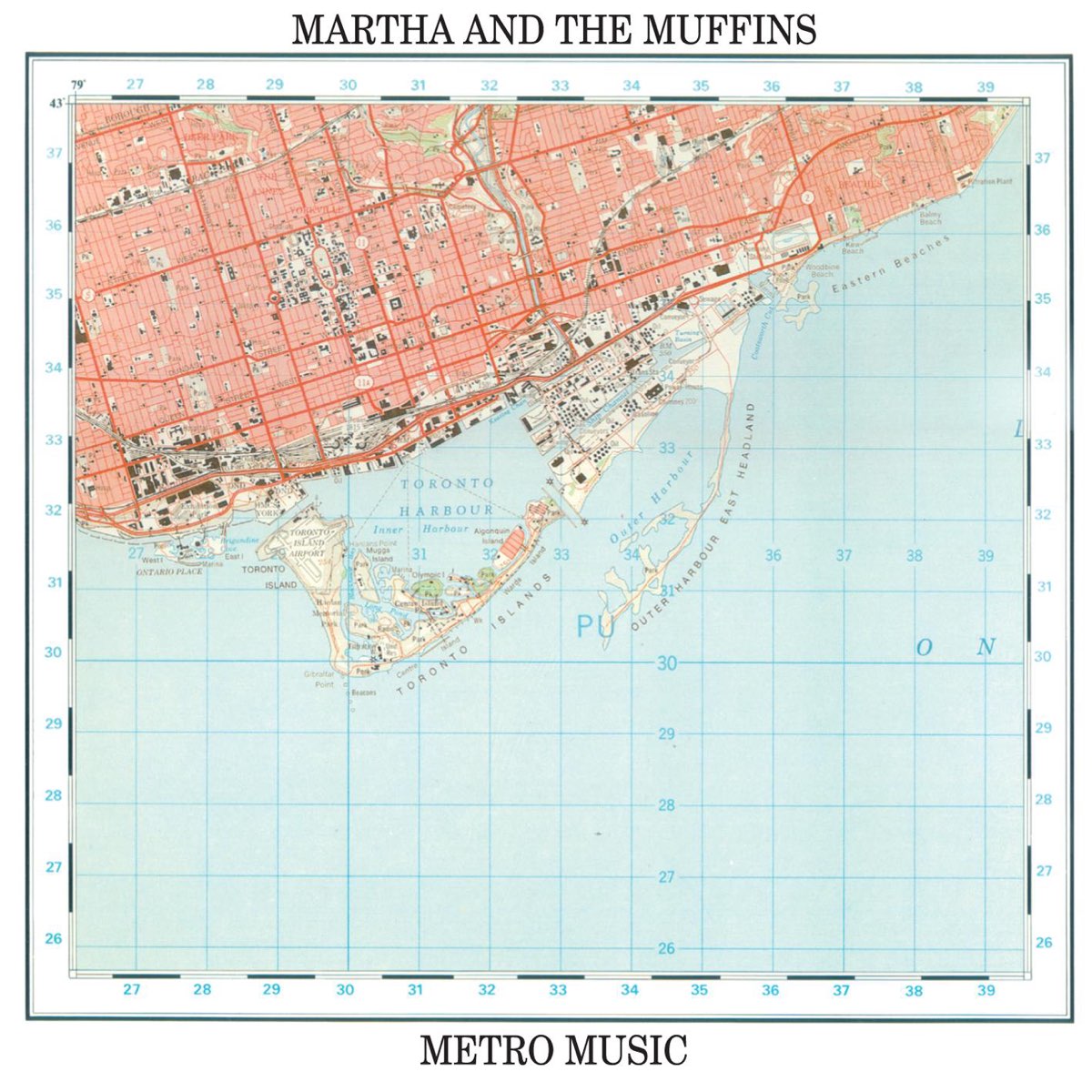
Metro Music is a sharp, imaginative debut that captures the nervous energy of the post-punk era without losing its melodic appeal. “Echo Beach” remains the obvious centrepiece, but the album’s real strength lies in its atmosphere: intelligent, off-kilter, and faintly surreal. Clearly Toronto is a great source of interesting artists and as a bonus you can use the cover to navigate the downtown/harbour district.
*
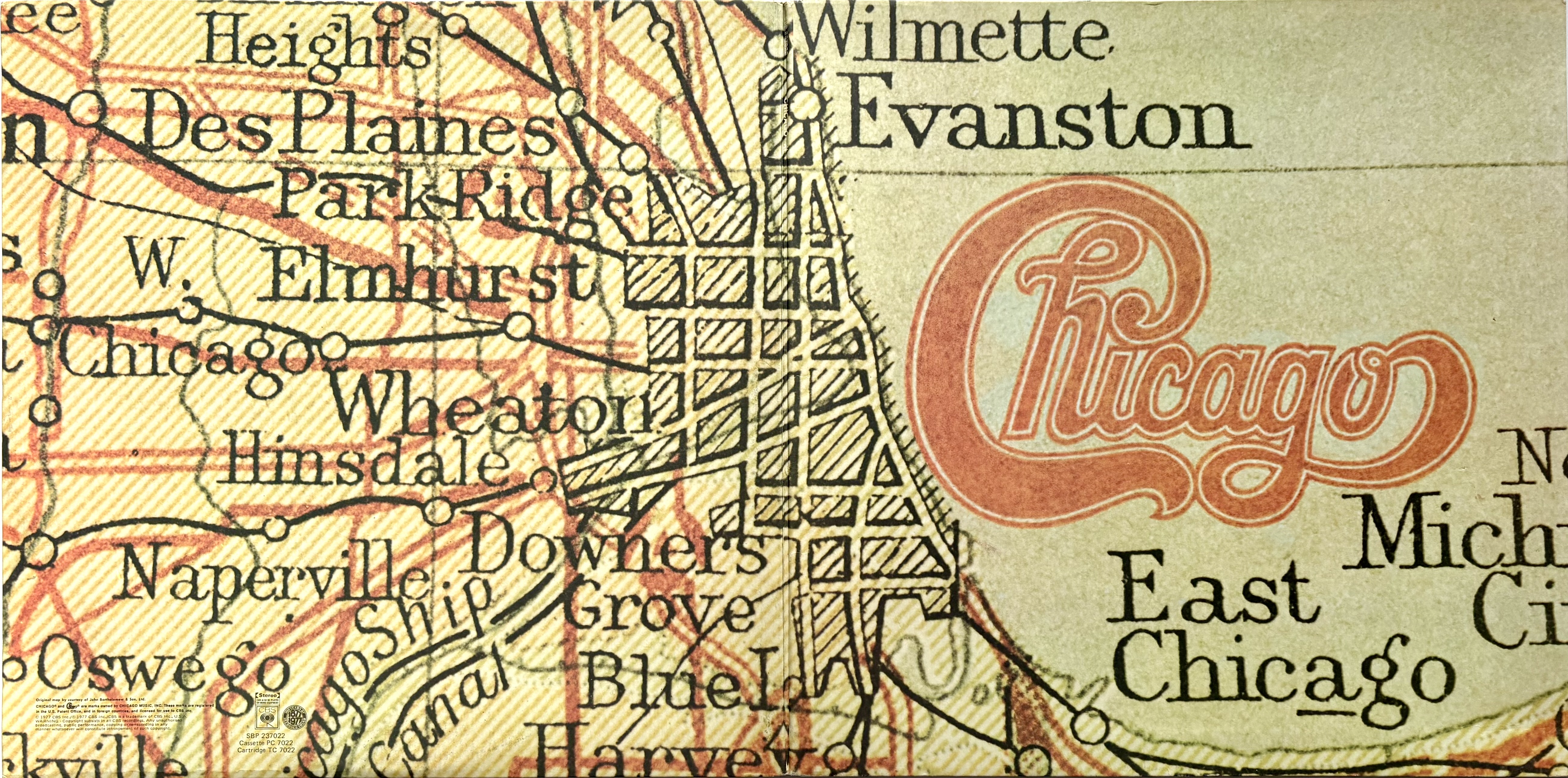
Chicago — XI [Columbia, 1977]
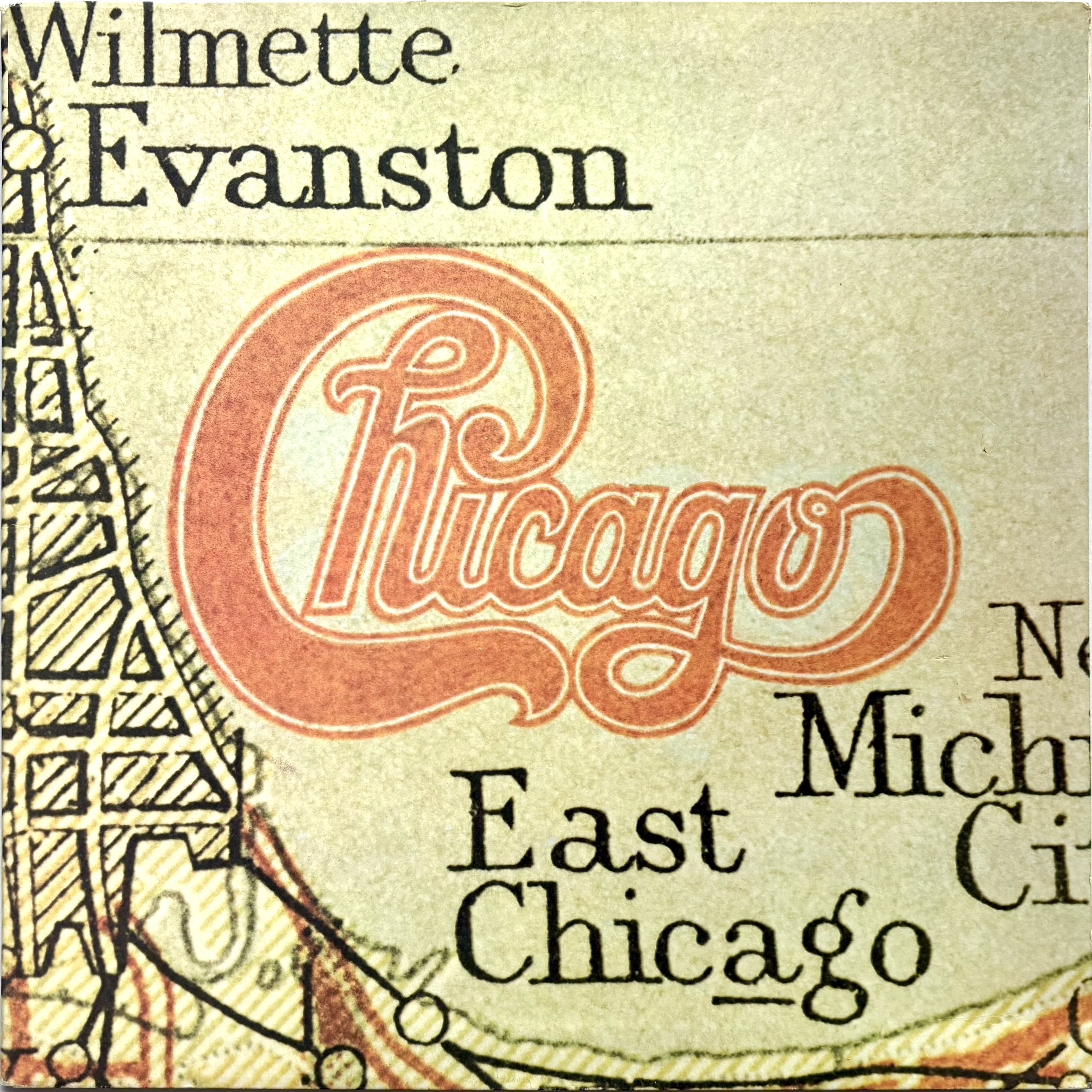
Released in 1977, Chicago XI is a polished but still varied late-period statement from the group’s classic line-up. Peter Cetera’s “Baby, What a Big Surprise” supplies the album’s major radio moment, while “Take Me Back to Chicago” and the brass-led arrangements retain the band’s distinctive identity.
While lacking the spark and ambition of the first few albums, XI is a perfectly enjoyable AOR record, made more poignant by it being guitarist Terry Kath’s last appearance with the band.
It’s amazing that it took the band eleven albums to come up with the idea of using a map of Chicago as a cover image.
*
Nile Rogers — Adventures In The Land Of The Good Groove [Mirage, 1983]
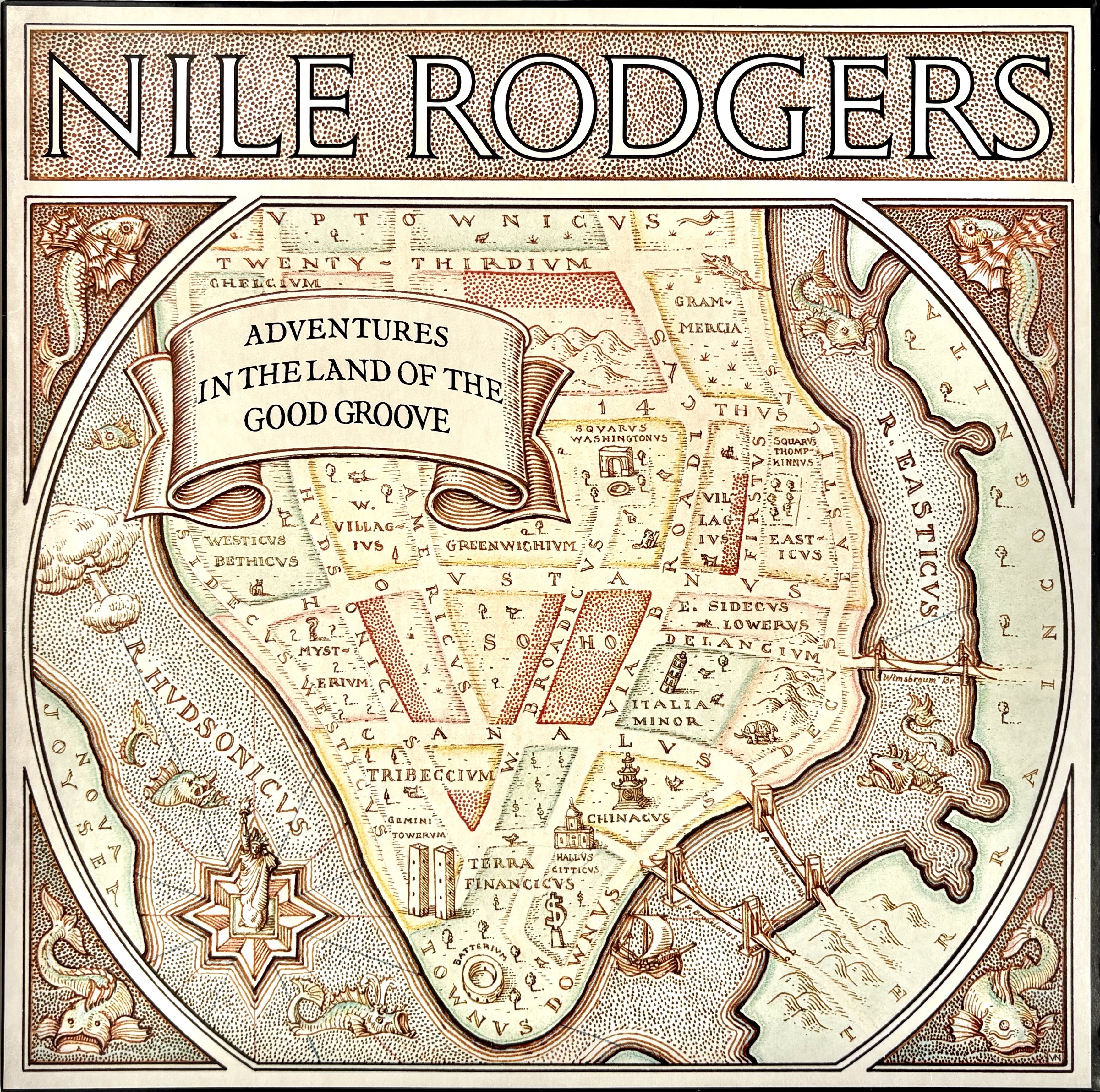
Nile Rodgers is one of popular music’s great architects: a guitarist, songwriter, arranger, and producer whose rhythmic style helped define disco with the band Chic.
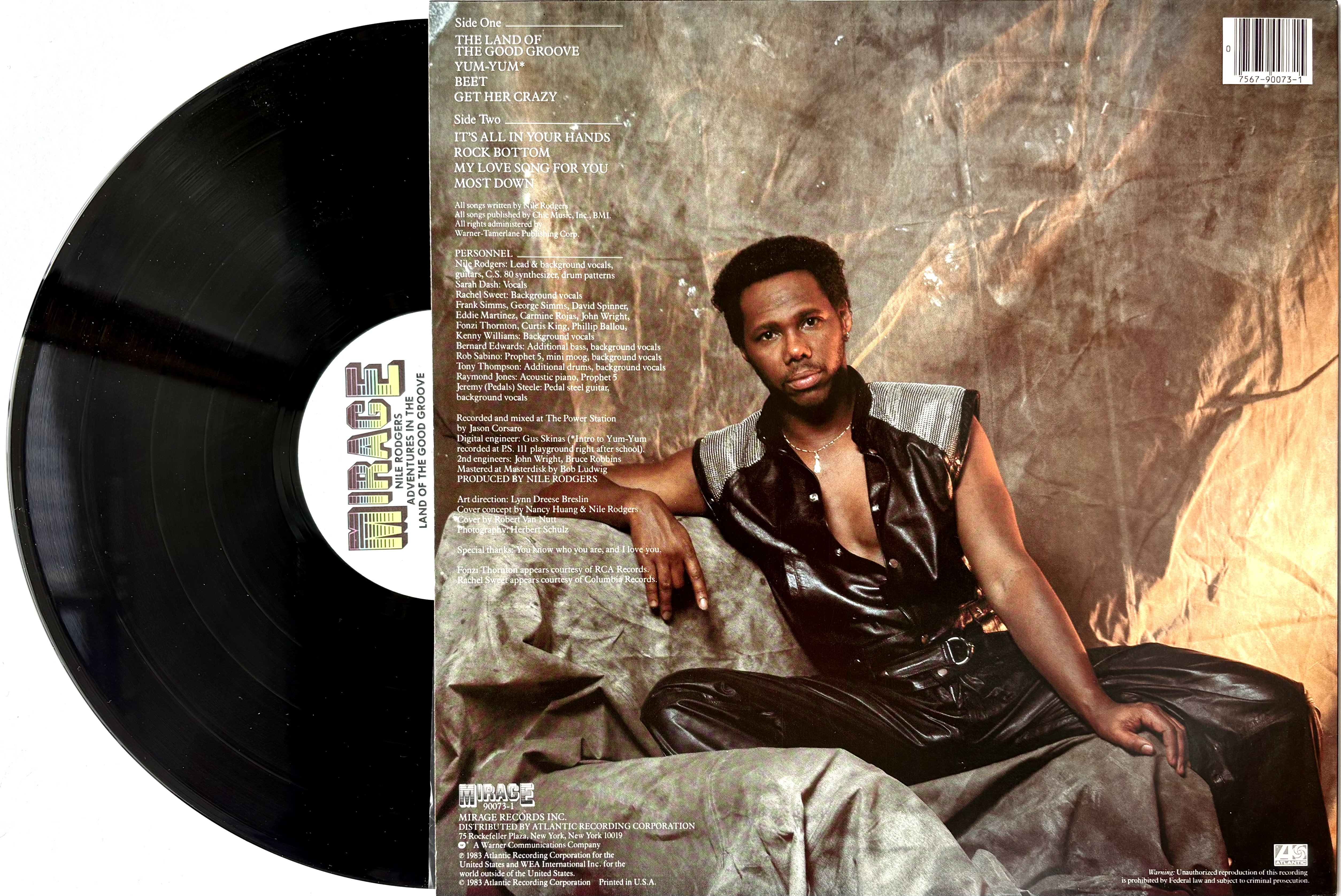
Adventures in the Land of the Good Groove is Rodgers’ first solo album and a stylish showcase for his signature rhythmic precision. It trades Chic’s communal sparkle for a more streamlined, studio-crafted funk, full of bright guitars, sleek grooves, and early-eighties polish. The cover’s conceit of New York as an ancient Roman city is a fun idea, deftly realised by Robert Van Nutt.
*
The Pogues — Hell’s Ditch [Island, 1990]
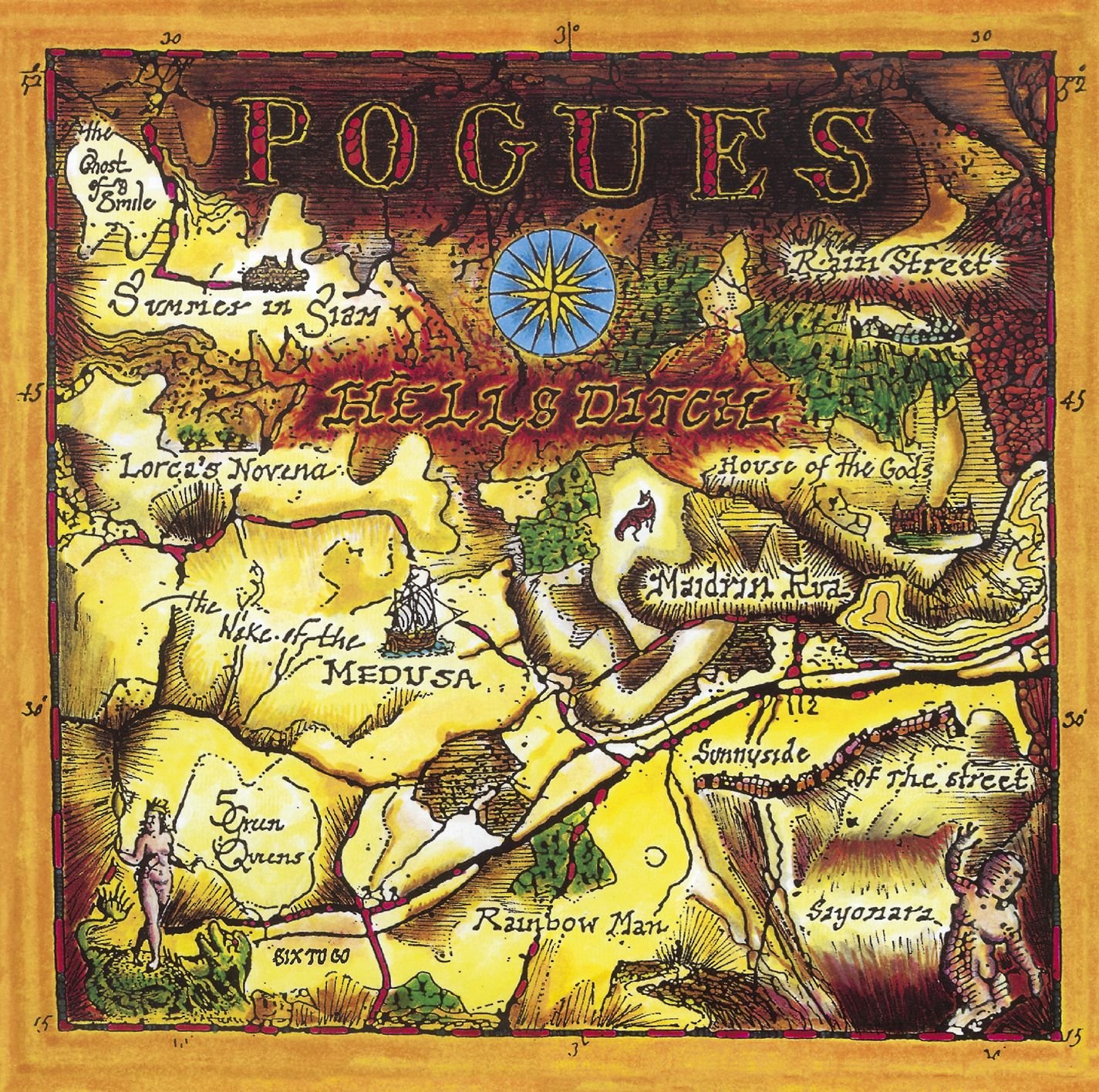
London-based, folk-punk. Tradition and larceny, debauchery and poetry. Hell’s Ditch produced by The Clash’s Joe Strummer. Shane MacGown dissipated. Album flopped; singer sacked. Cover created by Joshua Cheuse, a fictional map with songs as place names. Its’ illustrated explorer style suits the album’s roaming, story-filled world.
*
Pickettywitch — Pickettywitch [Pye/Astor, 1970]
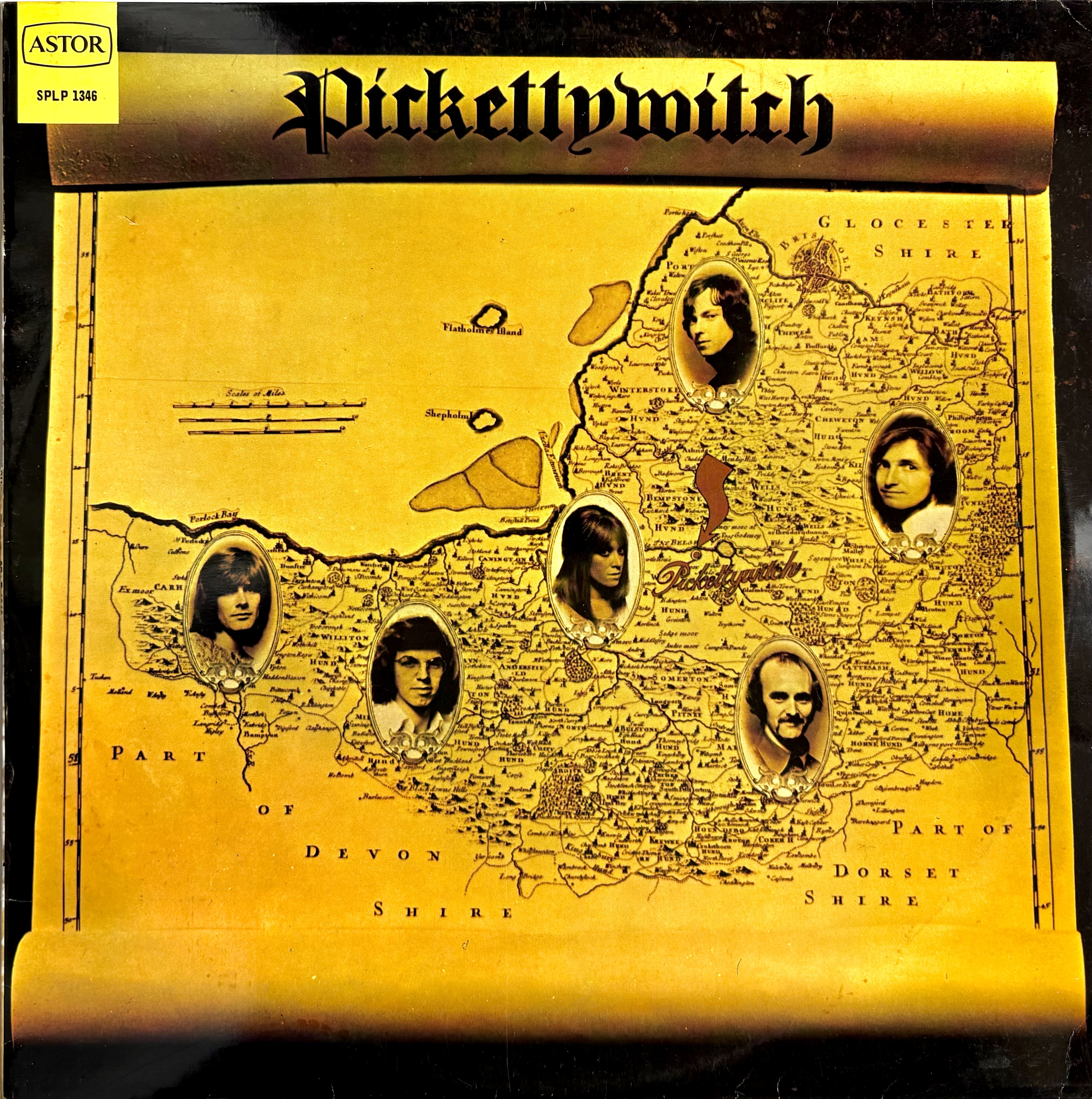
A MOR pop group who released one album and a couple of singles, probably the most interesting thing about Pickettywitch was the name. According to Allmusic, “The name Pickettywitch came from a Cornish village through which (singer Polly) Browne had passed with her sister.” Sadly, the music is about as hip as the sepia map on the cover.
*
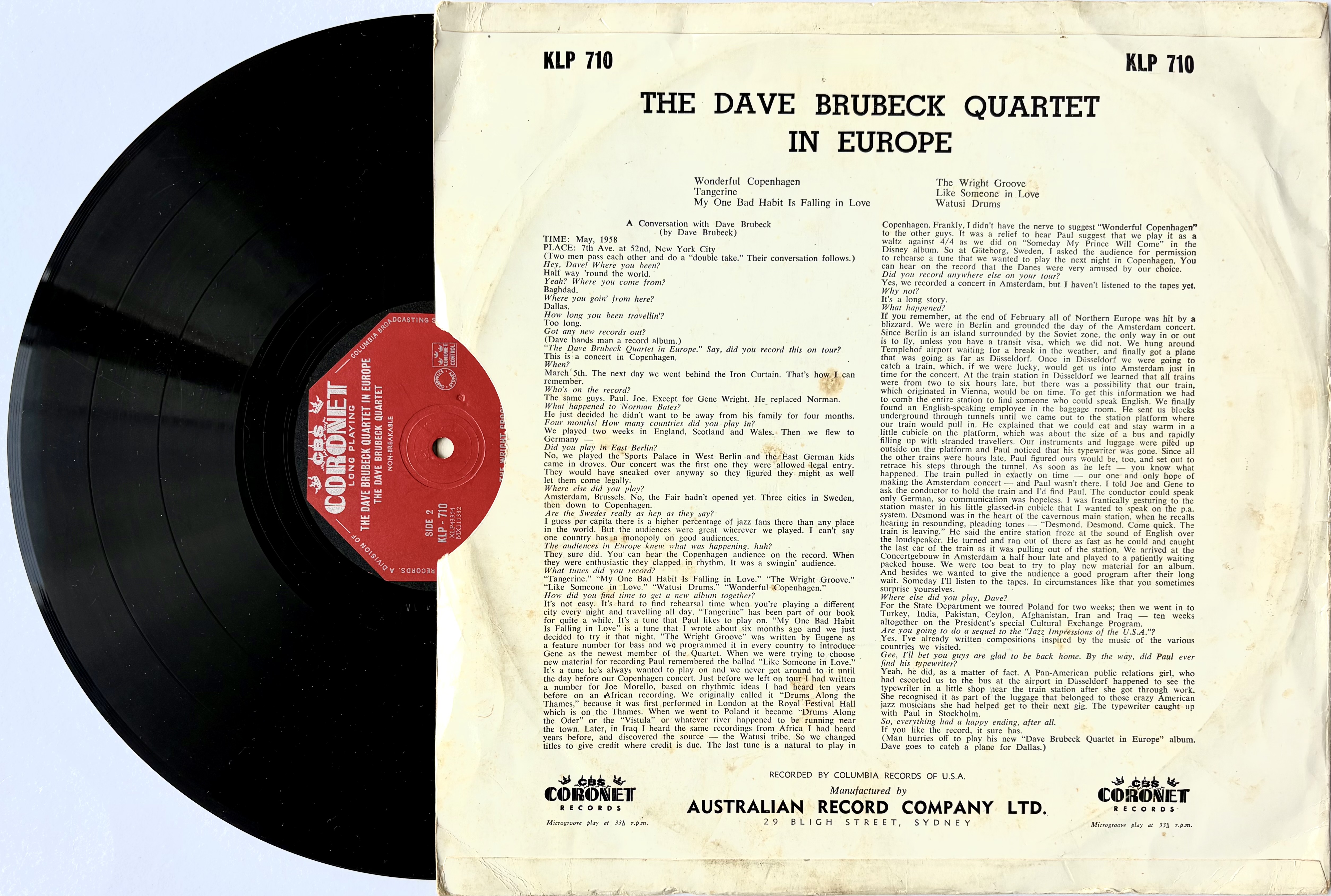
The Dave Brubeck Quartet — In Europe [Columbia/Coronet, 1958]
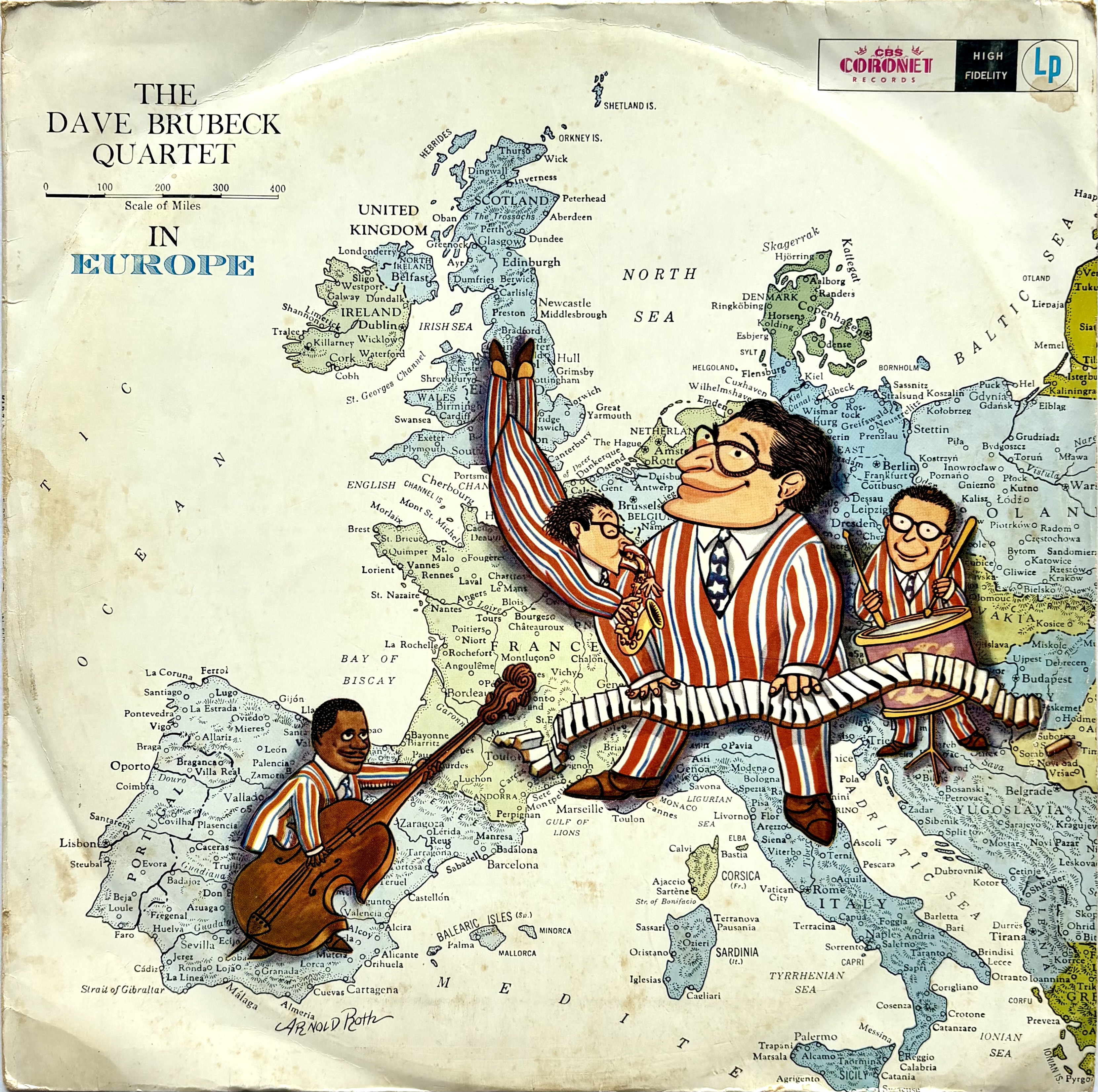
Recorded live in Copenhagen in 1958, The Dave Brubeck Quartet in Europe captures the classic quartet—Brubeck, Paul Desmond, Eugene Wright, and Joe Morello—at an exhilarating early peak. The music has the clarity and formal poise associated with Brubeck, but the concert setting brings out a welcome looseness: Desmond’s cool, lyrical alto lines glide through the arrangements while Morello and Wright keep the rhythm supple and alert. The jazz classic Time Out was released the following year.
Distinguished American cartoonist Arnold Roth was a good mate of Paul Desmond, and produced several album covers for the quartet. This example shows his animated, light-hearted style.
*
Triumvirat — Mediterranean Tales (Across The Waters) [Harvest, 1972]
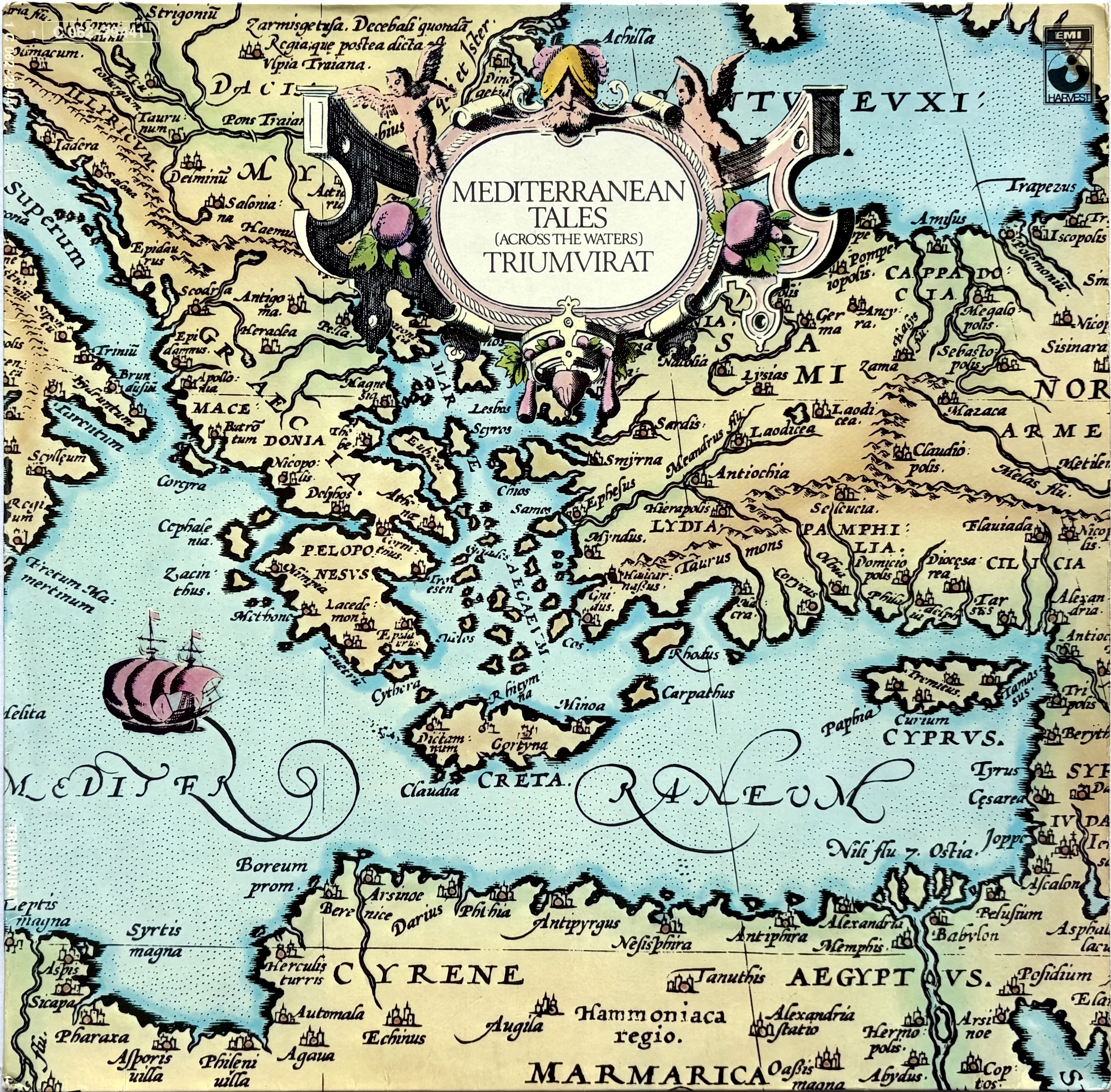
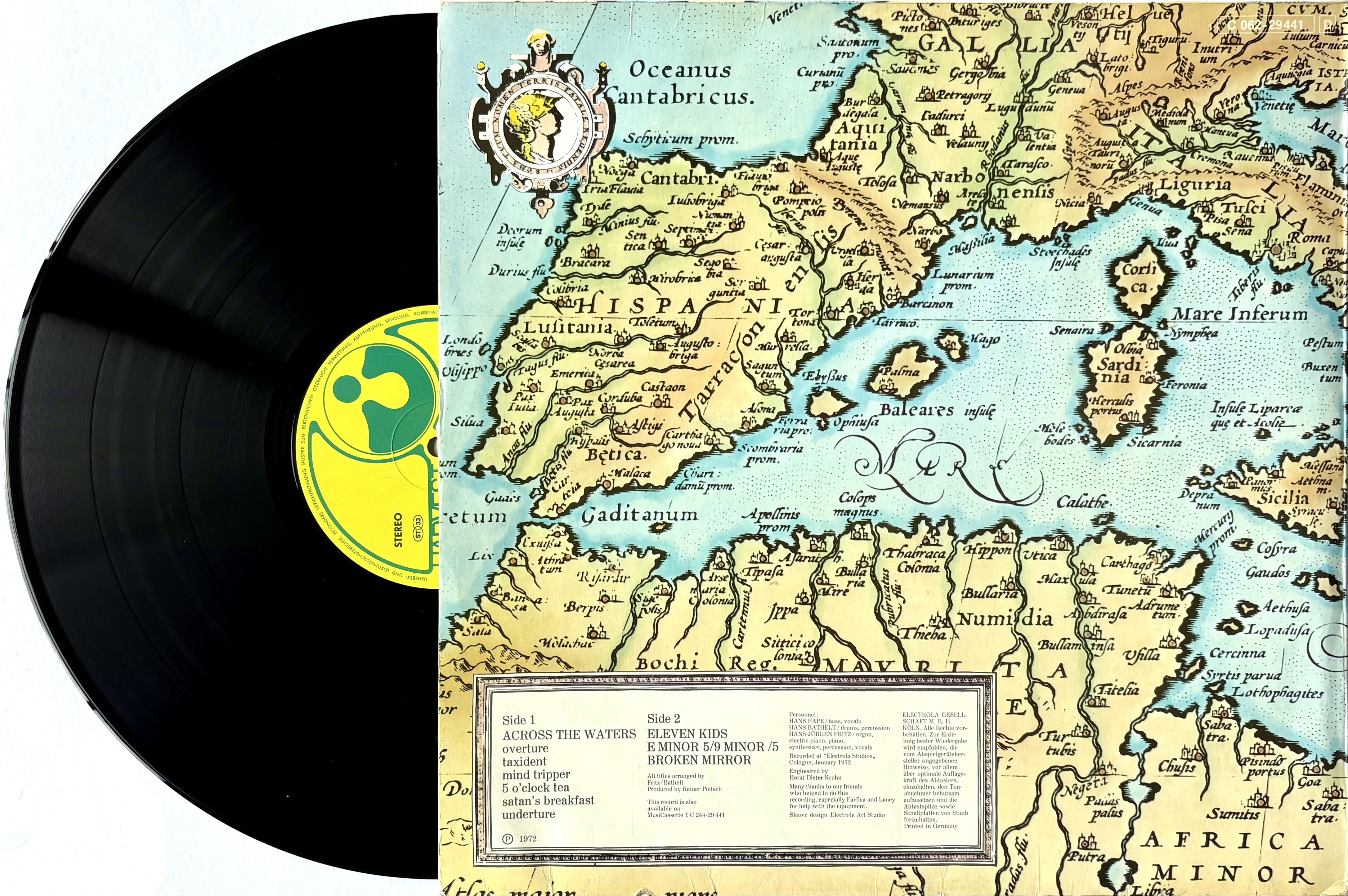
Building on the classic training of keyboardist and composer Hans-Jürgen Fritz, Triumvirat were often compared to The Nice (and subsequently Emerson, Lake and Palmer). Mediterranean Tales (Across the Waters) is an ambitious debut that announces Triumvirat’s musical priorities immediately. The extended title suite moves through shifting moods, ornate organ passages, and classical quotations, displaying Fritz’s flair for dramatic structure. It is rougher and less fully realised than the group’s later landmarks, but that is part of its appeal: a vivid, youthful record of a band already reaching beyond standard rock forms.
A beautiful map cover to close this post. Evocative of early-modern European map-making, it uses classical place names (Aegyptus, Creta) and delightfully compliments the neo-classical progressive music within.
*
FEATURE IMAGE
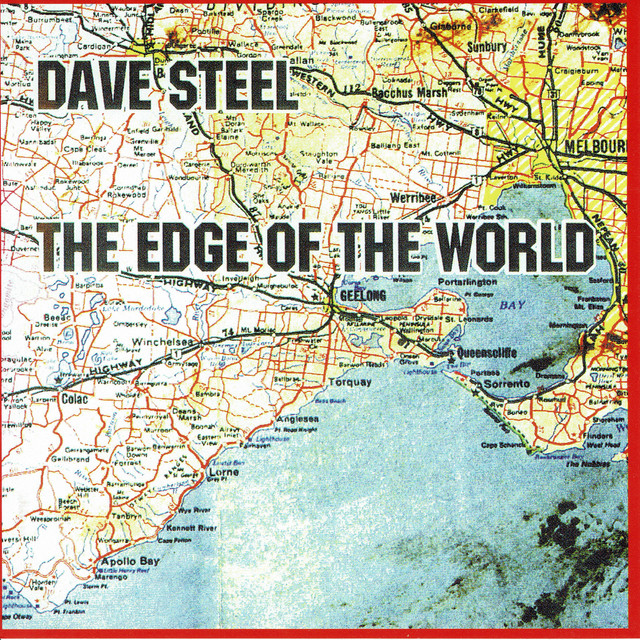
Dave Steel — The Edge Of The World [Not on label, 1999]
Solo album by former member of Australian folk-rock band Weddings Parties Anything. If you look closely, you can see my house. Almost.
*
While researching this article I discovered a recent book by Australian cartographer and record collector Damien Saunder. It’s a lovingly compiled atlas of album covers, utilising a broad and all embracing definition of ‘map’ (eg: Fragile by Yes is featured). Includes over four hundred covers and looks great. Find out more here.
*
Can you think of other album covers that would feel right at home here?


Great post.
LikeLiked by 2 people
Cheers Geo. Been curating this one for several years!
LikeLiked by 2 people
Wow, I had no idea there were so many album covers with cartographic elements.
In my neck of the woods, sadly, maps and (re)naming stuff have become a charged subject that makes you feel you just entered the friggin’ twilight zone.
On a more cheerful note, here’s another cartographic cover I just randomly recalled, though it’s a sampler rather than a regular studio album. But it’s good stuff! 🙂
https://www.discogs.com/master/636467-Various-The-Motown-Story-The-First-Twenty-Five-Years/image/SW1hZ2U6MjYxNzY4NTM=
LikeLiked by 2 people
That Motown compilation/history is a starter for sure, Christian. Thank you!
As for the Idiocracy, less said the better. Though I’ve renamed the White House as the Nut House.
LikeLiked by 2 people
🤣
LikeLiked by 1 person
So great to see you back here old sport! Delightful scenes skating across my phone…
LikeLiked by 2 people
Many thanks, good sir. I’d held off on this particular feature as I was hoping to find the Martha & the Muffins LP ‘in the wild’. No luck, so that one is a digital interloper. (Don’t tell! 🤫)
LikeLiked by 2 people
Sorry I was coming up dry with ideas myself. That Eno one was all I got!
LikeLiked by 2 people
What a great way to shove a knitting needle through old fashioned filing card punch-holes -> a terrific cross section of music as well as album covers.
Thanks,
DD
LikeLiked by 2 people
Right on the case there, DD. Art rock, funk, AOR, jazz, folk and of course Prog!
LikeLiked by 2 people
A fun collection! The Roman NYC I especially like. Latin feels like a natural, I’m sure Nero and Caligula would feel right at home. And in the Loca Remota where I grew up, there’s a Rome, Carthage, Syracuse, etc
Muse’s “2nd Law” album had a beautiful picture of the neural pathways in the brain, does that count as a map?
LikeLiked by 2 people
The Saunder book might well stretch to neural pathways, Robert. This set is more literal, I’m afraid.
I learned yesterday that Canberra, the nation’s capital and a ‘planned’ city has streets in different suburbs thematically thematically named. There’s a Musicians suburb, for example, and an Astronomy and the Stars district. Rather a fine idea, don’t you think?
LikeLiked by 2 people
It’s a very nice idea. You could live on Critics Row.
LikeLiked by 1 person
aka Desolation Row?
LikeLiked by 1 person
Tom McRae’s All Maps Welcome is another.
LikeLiked by 1 person
That’s a good ‘un! Thanks G.
https://vinylconnect.wordpress.com/wp-content/uploads/2026/09/tom-mccrae.avif
LikeLike
Bruce got the Melways out. Yusef Lateef’s Detroit.
LikeLiked by 1 person
Oh, very nice indeed Woody. Many thanks.
LikeLike